Feedzilla

Apple breaks record for biggest ever company profit despite iPhone sales fall


by
Apple has posted the biggest quarterly profit of all time despite a fall in iPhone sales.

The world's biggest company posted profits of $20.1bn (£14bn) in the crucial final three months of the year, breaking its own record set two years ago.

It came after the release of the £999 iPhone X in November, the biggest update of the handset to date, as well as the release of the iPhone 8 in September.

Although Apple sold 77m iPhones in the three month period, a 1pc fall from last year, the higher price of the new handsets meant revenues from selling iPhones increased.

iPhone X surpassed our expectations and has been our top selling iPhone every week since it shipped in November,” Cook said.

The company’s revenues grew 13pc to $88.3bn, also a record. The $20.1bn profits were up 12pc, from $17.9bn a year earlier.

Sales of the iPad increased marginally, while those of Apple's Mac computers fell. Sales of "other products" - a group that includes the Apple Watch and Apple TV - were up 36pc.

 
Shares initially fell in after-hours trading as Apple disappointed investors with its guidance for the next quarter, but rebounded soon after. The company said it expected revenues of between $60bn and $62bn, below expectations.

"We’re thrilled to report the biggest quarter in Apple’s history, with broad-based growth that included the highest revenue ever from a new iPhone lineup," Mr Cook said. He added that 1.3bn Apple devices are now in use, up from 1bn two years ago.

Cook said there had been a record year for the App Store, with augmented reality apps a particular area of growth. Sales of the new Apple Watch Series 3 were double those of the Series 2 last year.

Apple is the world's biggest company and is often tipped to be the first to break the one-trillion-dollar value mark, but shares have wavered in recent weeks amid fears that it may be cutting back iPhone X production.

The new handset, which boasts a bigger screen, no home button, and facial recognition technology, was well received by reviewers but costs up to £1,249 for its most expensive version. Apple said the decline in iPhone sales was largely due to the quarter being a week shorter than last year.

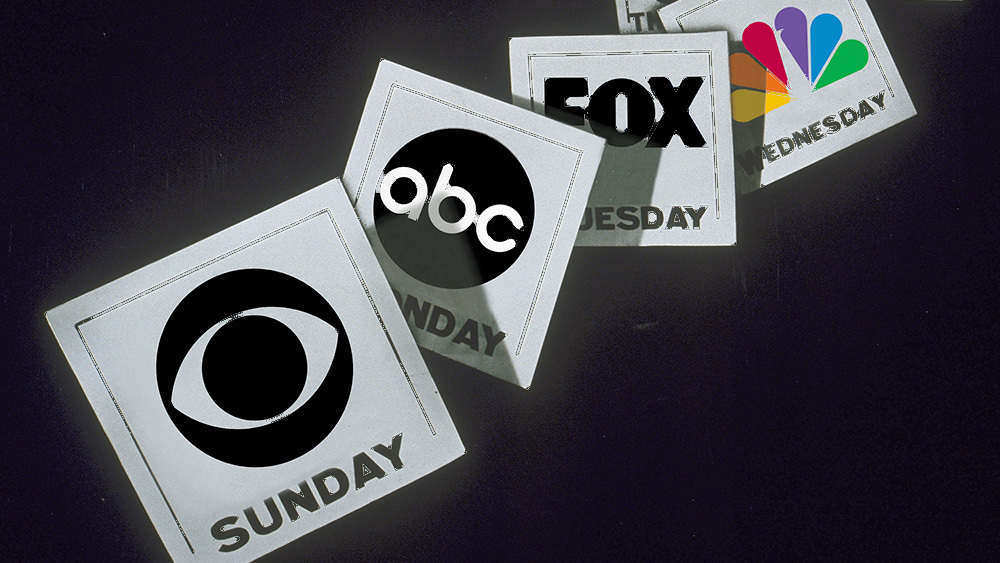
Nearly 46 Million Viewers Watch President Trump's State of the Union Address

Source: Nielsen
2018 State of the Union Address
Sum of networks live + same day

Jan. 30, 2018RatingNumber of Viewers
All Households 26.932,168,000
Persons 2+ 14.945,551,000
Persons 18-34 6.04,166,000
Persons 35-54 15.512,374,000
Persons 55+ 29.426,620,000


2018 Networks Included: ABC, CBS, FOX, NBC, Estrella, Telemundo, Univision, CNN, FOX Business, FOX News, MSNBC and PBS.
Below is a historical look at past State of the Union addresses.
Historical State of the Union Addresses

DateNetworksCombined Household RatingCombined No. of HouseholdsCombined No. of ViewersPresident
2/28/2017*ABC, CBS, FOX, NBC, UNI, PBS, CNN, Fox Business Net, FOXNC, MSNBC, and NBC Universo28.733,857,00047,741,000Trump
1/12/16ABC, Al Jazeera America, Azteca, CBS, CNN, FOX, FOX Business Network, FOX News Channel, Galavision, MSNBC, NBC, NBC Universo, Univision^19.623,040,59031,334,349Obama
1/20/15ABC, Al Jazeera America, Azteca, CBS, CNN, Fox, Fox Business Network, Fox News Channel, Galavision, MSNBC, MundoFox, NBC, Univision^19.923,137,48331,710,349Obama
1/18/14CBS, ABC, NBC, FOX, Azteca, Fox Business, Fox News Channel, CNN, MSNBC, CNBC, Al Jazeera America, Galavision, Mun2, UNI^20.723,949,84333,299,172Obama
2/12/13FOX, ABC, CBS, NBC, PBS, Azteca, UNI, MFX, CNBC, CNN, Fox Business, Fox News Channel, MSNBC, Current, Centric, GALA21.824,767,04733,497,607Obama
1/24/12ABC, CBS, FOX, NBC, TEL, TF, UNI, CNBC, CNN, FBN, FOXNC, GALA, MSNBC and MUN22427,569,42337,752,613Obama
1/25/11ABC, CBS, FOX, NBC, TEL, UNI, CNN, Centric, CNBC, FOXNC, and MSNBC26.630,871,68842,789,947Obama
1/27/10ABC, CBS, FOX, NBC, TEL, UNI, CNN, BET, CNBC, FOXNC, MSNBC29.834,182,72548,009,595Obama
2/24/2009*ABC, CBS, FOX, NBC, CNBC, CNN, FOXNC, MSNBC, TELEMUNDO, UNIVISION32.537,185,00052,373,000Obama
1/28/08ABC, CBS, FOX, NBC, CNN, FOXNC, MSNBC, TELEMUNDO^, UNIVISION24.727,702,00037,515,000G.W Bush
1/23/07ABC, CBS, FOX**, NBC, CNN, FOXNC, MSNBC, TELEMUNDO**, UNIVISION **29.632,968,00045,486,000G.W. Bush
1/31/06ABC, CBS, FOX, NBC, CNN, FOXNC, MSNBC26.929,578,00041,699,000G.W. Bush
1/31/06TELEMUNDO, AZTECA AMERICA, TELFUTURA, TELEMUNDO8.4950,0001,480,000G.W. Bush
2/2/05ABC, CBS, FOX, NBC, CNN, FOXNC, MSNBC25.227,699,00038,382,000G.W. Bush
2/2/05TELEMUNDO, TELEFUTURA6660,0001,050,000G.W. Bush
1/20/04ABC, CBS, FOX, NBC, CNN, CNBC, FOXNC, MSNBC2830,286,00043,411,000G. W. Bush
1/28/03ABC, CBS, FOX, NBC, CNN, CNBC, FOXNC, MSNBC38.841,447,00062,061,000G. W. Bush
1/29/02ABC, CBS, FOX, NBC, CNN, CNBC, FOXNC, MSNBC33.635,547,00051,773,000G.W. Bush
2/27/2001*ABC, CBS, FOX, NBC, CNN, FOXNC, MSNBC27.628,201,00039,793,000G.W. Bush
1/27/00ABC, CBS, FOX, NBC, CNN, FOXNC, MSNBC22.422,536,00031,478,000Clinton
1/19/99ABC, CBS, FOX, NBC, CNN, FOXNC, MSNBC3130,700,00043,500,000Clinton
1/27/98ABC, CBS, FOX, NBC, CNN, CNBC, FOXNC, MSNBC37.236,513,00053,077,000Clinton
2/4/97ABC, CBS, FOX, NBC, CNN28.427,600,00041,100,000Clinton
1/23/96ABC, CBS, FOX, NBC, CNN29.628,400,00040,900,000Clinton
1/24/95ABC, CBS, NBC, CNN29.528,100,00042,200,000Clinton
1/25/94ABC, CBS, NBC, CNN32.931,000,00045,800,000Clinton
2/17/1993*ABC, CBS, NBC, CNN44.341,200,00066,900,000Clinton

Deborah Flora: How to Identify Your Core Beliefs

Viewers approve of Trump's first State of the Union address - CBS News poll


By Jennifer De Pinto, Fred Backus, Kabir Khanna and Anthony Salvanto 


Views of the speech

Three in four Americans who tuned in to President Trump's State of the Union address tonight approved of the speech he gave. Just a quarter disapproved.

How did the speech make you feel? 

Eight in 10 Americans who watched tonight felt that the president was trying to unite the country, rather than divide it.  Two-thirds said the speech made them feel proud, though just a third said it made them feel safer.  Fewer said the speech made them feel angry or scared.

Party Identification 

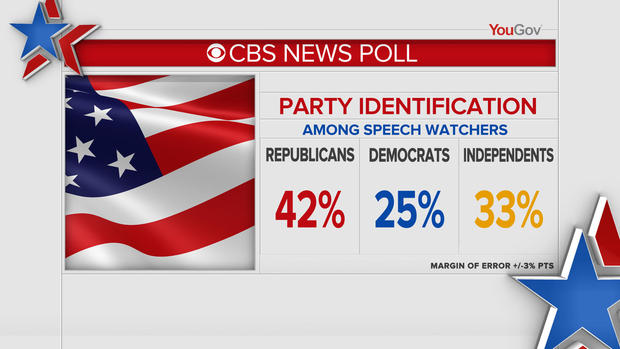
But as is often the case in State of the Union addresses, the people who watched tonight's speech leaned more towards the president's own party, at least compared to Americans overall.  In the latest CBS national poll released earlier this month, 24 percent of Americans identified themselves as Republicans.  Among those who watched tonight's address, that percentage was 42 percent, bolstering the overall approval of the address.

2.jpg
And while Republicans approved of the speech, most Democrats who tuned in did not.  Nine in 10 Republicans said the speech made them feel proud, while just over half of Democrats said it made them feel angry. Independents who watched the speech – nearly half of whom counted themselves the President's supporters – tended to approve of the speech, and said it made them feel proud.
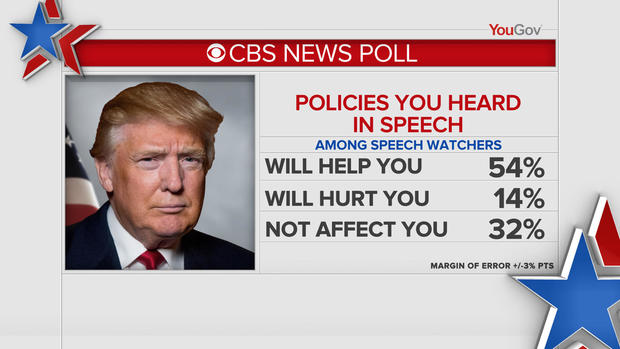
After hearing his State of the Union address, most viewers think the policies they heard tonight would help them personally, though Democrats disagree.

4.jpg

Policies you heard in the speech 

On some of the specific issues the President touched upon, most viewers had a favorable opinion of what Mr. Trump had to say about the nation's infrastructure, immigration, and national security.


Credit for the economy

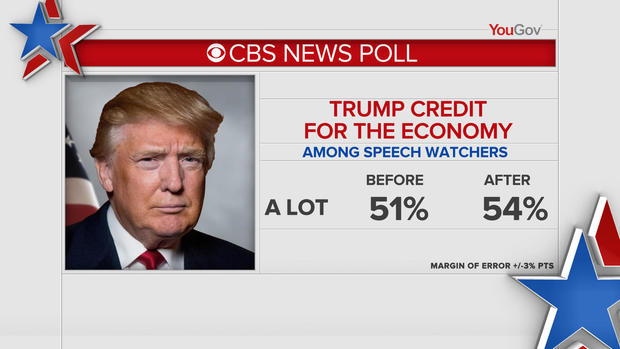
And after hearing him speak tonight, 54 percent of speech watchers give him a lot of credit for the current state of the nation's economy, up from 51 percent before they watched the State of the Union.

7.jpg


This CBS News 2018 survey is based on 1,178 interviews conducted on the internet of U.S. residents who watched the State of the Union Address. Panelists were previously interviewed on January 29-30, 2018 to indicate whether they planned to watch the address, and if they were willing to be re-interviewed after the address. Questions asked during this initial interview have the note "Asked before the SOTU address.'' The margin of error is +/- 3.1%.

How Overseas Film Sales Are Saving Hollywood!

Photographer: Paramount Pictures via Everett Collection
By Anousha SakouiThe duds just keep coming this summer in North America, from “The Mummy” to “Alien: Covenant” to “Pirates of the Caribbean: Dead Men Tell No Tales.” The season has been what critics politely call lackluster for Hollywood studios -- but don’t expect them to stop churning out more bombs.

That’s because as badly as so many franchise films and reboots have done in the world’s biggest cinema market, they’ve racked up solid ticket sales elsewhere. Theater-goers in America thought Paramount Pictures’ fifth “Transformers” was pretty much a yawner, but in China they liked it. And No. 6 is already in the works.

“Look at the casualties just this summer,” said Paul Dergarabedian, a Los Angeles-based analyst for ComScore Inc. “If they only had North America, it would be a monumental disaster for the studios.”

For now at least, the rest of the world -- China in particular -- is supporting Hollywood’s love affair with series, sequels and rehashes like “The Mummy,” Universal Pictures’ new take on a story that’s been told dozens of times. The risk is that sequel fatigue will set in overseas too. Chinese moviegoers are becoming more choosy, and the fastest-growing film market is slowing down. That’s a challenge for studios such as Walt Disney Co. and Time Warner Inc.’s Warner Bros., which plan and schedule movies years in advance.

Jonathan Papish, an analyst for China Film Insider, described as a “disaster” the $250 million that “Transformers: The Last Knight” is projected to record in the world’s most-populous country. The reason: the previous version from Viacom Inc.’s film division pulled in 17 percent more, “a worrisome sign for both Paramount and other Hollywood studios who have become far too complacent thinking that Chinese audiences will swallow whatever garbage they shove down their throats.”
This “Transformers” opening in China, at least, was about 30 percent bigger than the opening for the previous one, according to Box Office Mojo.

Not every sequel or franchise entry has fallen flat in North America, of course. “Wonder Woman,” Warner Bros.’ fourth episode in the DC Extended Universe series, has taken in $346 million domestically and is one of the year’s top films. Disney’s “Guardians of the Galaxy Vol. 2” topped the box office for two weeks and has taken in $383 million domestically.

And there are some big-hitters coming. Sony Corp.’s “Spider-Man: Homecoming” is expected to take in $301 million in North America after its release this weekend, according to BoxOfficePro.com. 

“War for Planet of the Apes,” out July 14 from 21st Century Fox Inc., could grab $165 million.

But the second-quarter domestic box office ended down 3.6 percent from a year ago at $2.7 billion, Barton Crockett, an analyst at FBR & Co., said in a note. He blamed disappointing sequels; even with a better-than-expected “Wonder Woman,” he predicts a 15 percent decline for the third quarter.

Chinese box-office sales fell in June, as local movies as well as Hollywood imports failed to meet expectations. This month, PricewaterhouseCoopers LLC pushed back its forecast for China’s movie market to overtake the U.S. to 2021 from 2017.

This weekend, Universal’s “Despicable Me 3” will test the Chinese market, after opening in first place in 44 out of 46 countries, according to data from the film division of Comcast Corp. A new installment in another Universal series, “The Fate of the Furious,” enjoyed strong demand in China, taking in $393 million there earlier this year.

Even with big budget films flopping at home, movies can earn money for years to come from digital downloads and sales to Netflix Inc. and other streaming sites and cable-television channels. The latest -- and last -- “Pirates of the Caribbean” may have missed expectations when it came out May 26, but it could end up generating a net profit of $219 million, according to an estimate from Wade Holden, analyst with S&P Global Market Intelligence.

That hasn’t stopped some analysts from complaining that studios have focused too much on making big-budget features.

“There is an over reliance on sequels,” said Richard Greenfield, a media and technology analyst at BTIG LLC. The major studios “are so worried about investing in an unknown property that they are all just relying on sequels and hoping that sequels will save them.”

While Disney has had tremendous success, Greenfield said it’s not bullet-proof. “The danger is that investors are essentially assuming that a movie like ‘Star Wars’ will be successful forever.”

As much as any studio, Disney has tied its future to sequels and remakes. The company’s 2017 schedule includes eight films, of which six fit that profile, according to Box Office Mojo.

Disney said its strategy sets it apart from the competition -- in 2016 its film business had its most profitable year ever. Other studios trying to ape it have had less success. Sony, for example, tried and failed to refresh its 1984 hit “Ghostbusters” last year in the hope that it could spawn a new series.

In any event, many future slates are laden with new installments of existing worlds of characters. 21st Century Fox and Sony, which license Marvel characters, are planning more “X-Men” and “Spider-Man” chapters.

Disney has laid out several years worth of Marvel superhero offerings and at least a six-picture series of “Star Wars” movies. Meanwhile, the company is revisiting “Mary Poppins” and “Mulan.”

“Studios are rushing these sequels,” said Jeff Bock, senior analyst at Exhibitor Relations Co. “If you want to get the domestic audience back, you’ve got to do something a little outside the box.”

Gary Sinise's most important role

U.S. Jobless Claims Plunge to Lowest Weekly Tally Since 1973


By Katia Dmitrieva 

Highlights of Jobless Claims (Week Ended Jan. 13)

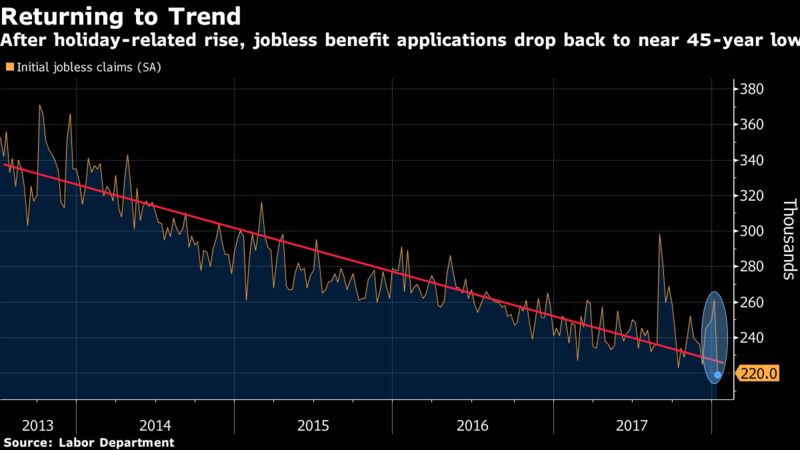
  • Jobless claims decreased by 41k to 220k (est. 249k); lowest level since Feb. 1973, biggest drop since April 2009
  • Continuing claims rose by 76k to 1.952m in week ended Jan. 6 (data reported with one-week lag)
  • Four-week average of initial claims, a less-volatile measure than the weekly figure, fell to 244,500 from the prior week’s 250,750
U.S. filings for unemployment benefits plummeted to the lowest level in almost 45 years in a sign the job market will tighten further in 2018, Labor Department figures showed Thursday.

Key Takeaways

The drop in claims shows that companies are increasingly holding on to their employees amid a shortage of skilled labor. Businesses are struggling to find workers to fill positions, particularly in manufacturing and construction, as cited in some anecdotes for the Federal Reserve’s Beige Book released Wednesday.

The figures suggest the unemployment rate of 4.1 percent, already the lowest since 2000, could be poised to decline further. The latest week for claims includes the 12th of the month, which is the reference period for the Labor Department’s monthly employment surveys.


Caveats for the latest numbers include the fact that the week was sandwiched between two periods containing holidays, when data tend to be more volatile. In addition, more states than usual had estimated figures.

Other Details

  • Prior week’s reading was unrevised at 261,000
  • Unemployment rate among people eligible for benefits rose to 1.4 percent from 1.3 percent in previous week
  • Claims were estimated for Arkansas, California, Hawaii, Kentucky, Maine, Puerto Rico, Virginia, Wyoming
  • New York’s unadjusted claims fell by 26,190 to 23,171; California’s estimated, unadjusted claims rose by 11,994 to 59,284
— With assistance by Chris Middleton, and Vince Golle