Feedzilla

Showing posts with label ANB Bussiness News. Show all posts

Rupert Murdoch could buy Fox regional sports networks back from Disney at a discount of billions

 by Alex Sherman

The front-runner to buy 22 regional sports TV networks from Disney is the same company that sold them in the first place.

“New Fox,” the company that will remain after Rupert Murdoch sells $71.3 billion worth of 21st Century Fox assets to Disney, is the leading contender to buy back the RSNs it “sold” to Disney as part of the larger transaction, according to people familiar with the matter. Those networks broadcast the games of 44 professional teams from Major League Baseball, the National Basketball Association and the National Hockey League

Formal offers haven’t come in yet. As Sports Business Daily reported, Disney only recently sent out its bid book to prospective buyers. News that Fox was considering buying back the channels was previously reported by The Information.

But people familiar with the process, who asked not to be named because the negotiations are private, say New Fox is the most serious buyer for all the networks. That’s a cleaner outcome for Disney than selling the networks piecemeal, which would bring in smaller buyers and private equity firms.
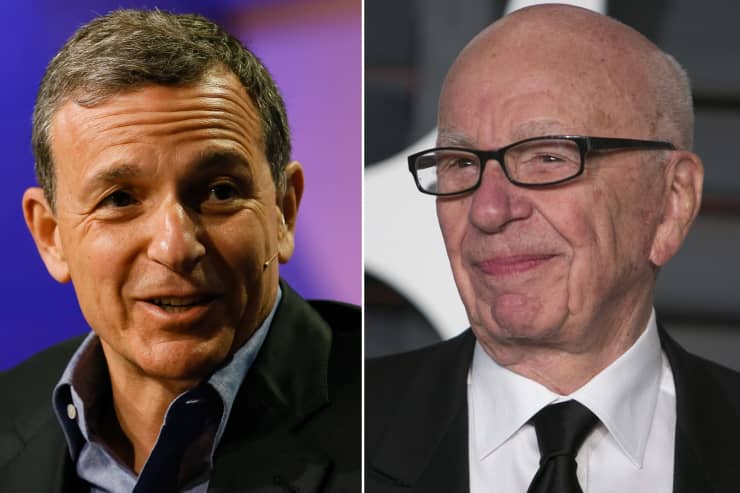
Premium: Bob Iger Rupert Murdoch split 
Premium: Bob Iger Rupert Murdoch split
Getty Images

Disney is a motivated seller because it can’t get its larger deal for Fox done without divesting the networks. The Department of Justice forced Disney, which owns ESPN, to sell the networks to alleviate concerns about too much sports programming power in the hands of one company. In fact, the networks might never even change hands, depending on when Disney’s larger deal of Fox closes.

Winning back the sports networks would be a coup for Rupert Murdoch, who could get the RSNs at a lower price than the value at which he sold them to Disney — a price that was driven up nearly $20 billion by Comcast’s rival bid for the bundle of Fox assets. There may also be beneficial tax benefits to Murdoch, related to tax-deductible amortization, one of the people said.
A declining asset that’s worth more to Fox than anyone else.
There are several ironies here.

First, while the DOJ forced Disney to sell the RSNs to get the larger deal done, the networks were never a crown jewel asset for Fox, Disney or Comcast. Fox was willing to sell them (and did). Disney took them because it wanted other assets from Fox (its studio, its stake in Hulu, Star India).

Meanwhile, Comcast saw the RSNs as an albatross and was equally willing to divest them, according to people familiar with the companies’ thinking.

Regional sports networks used to be huge value-adds for the cable industry. They carry exclusive broadcasting rights to local games, which come with devoted fan bases. About a decade ago, the networks began to hike carriage fees, knowing cable providers would agree to the higher prices rather than risk alienating customers by blacking out the networks. That led to a steady rise in the cost of cable for consumers. Residents of markets like New York or Los Angeles, which have multiple teams and a handful of RSNs, were paying fees up to $10 a month (baked into their monthly cable bill) whether or not they were watching the games.

In recent years, pay-TV providers, which have seen millions of customers cut the cord, have started to see RSNs differently. Providers have pushed to tier them onto packages that appeal just to sports fans while keeping costs lower for everyone else. This has decreased the value of the networks, which are no longer automatically part of everyone’s basic cable packages.


Several pay-TV providers have dropped regional sports networks, refusing to pay their high programming fees. For instance, SportsNet LA, which broadcasts L.A. Dodgers games, which hasn’t been carried by DirecTV for five straight years.

If Fox ends up with the sports networks again, part of the reason will be that no other large pay-TV distributor -- Charter, AT&T, Comcast or Dish -- saw value in owning the networks. While Sinclair Broadcast Group CEO Chris Ripley has discussed making an offer for the networks with private equity support, it would need quite a bit of help. Sinclair’s market capitalization is just $2.8 billion. The regional sports networks were valued at more than $20 billion, according to a Guggenheim Securities analysis.

It’s still unclear how much New Fox is willing to spend on the networks — or what Disney values them at. What is clear is that Disney needs to sell them.

Disney to divest regional sports networks post-deal.

The second irony is Murdoch can once thank rival Comcast for making him money if he ends up with the networks.

When Comcast and Disney were jockeying to buy Fox assets earlier this year, one thing was never in doubt -- Murdoch wanted to sell to Disney. Several times, Murdoch aligned himself with Disney’s bids against Comcast.

Yet, the competitive Comcast bids let Murdoch net $19 billion more for his bundle of assets.
Now, Comcast’s participation could help him get the sports networks at a bargain.

Disney originally agreed to buy the Fox assets for $52 billion. Comcast’s rival bids for Fox pushed the price up to $71.3 billion. In that process, it pushed valuation of the RSNs higher, as it did for all of the assets (including 39 percent of British TV provider Sky, which Comcast later agreed to buy).

Disney almost certainly won’t find a buyer that will pay that inflated valuation for just the networks. New Fox’s most likely competitor (barring a competitive bid from a company like John Malone’s Liberty Media) is a private equity firm -- and there’s little chance a leveraged buyout firm could win a bidding war for the RSNs and satisfy its limited partners that it would make a future return on the assets.

(Disney, by the way, will end up getting $15 billion back for selling its 39 percent stake in Sky and possibly about $20 billion for the RSNs, making that $71.3 billion Fox deal look more like $36 billion.)

It’s possible Google, Amazon or another technology company would eventually be interested in the networks for the sports rights. But that seems unlikely. The regional sports networks are tied to a legacy cable system that tech companies typically view as anathema. If Amazon or Google wants regional sports rights, they can just wait until current contracts expire and bid on them then.

The final irony is Fox’s decision to sell the RSNs to Disney may have actually convinced Murdoch that it was better off keeping them. In the months following Fox’s decision to sell, New Fox has clarified its focus, centering itself around news and sports. Netflix publicly praised the company for that decision last week.

It’s possible Fox has come to the conclusion owning the RSNs makes more sense than selling them, even if it didn’t think so 10 months ago.

Disclosure: Comcast is the owner of NBCUniversal, parent company of CNBC and CNBC.com

Hotel magnate, Gary Tharaldson, reveals his two biggest secrets to success

Gary Tharaldson shares tales of his business career during a talk at Minnesota State University Moorhead on Monday, April 16. Dave Olson/The Forum


MOORHEAD—Successful entrepreneur and hotel magnate Gary Tharaldson shared stories from his business career during an event at Minnesota State University Moorhead on Monday, April 16, wowing his audience with tales of how a boy who grew up near Dazey, N.D., on a farm that didn't have running water built a company that was sold to its employees in 1999 for about $1 billion.

About 15 years later, those employees walked away with about $600 million when they sold the company, providing many with a significant retirement fund, according to Tharaldson.

He said creating the employee stock ownership plan that made that possible is one of his proudest accomplishments in a career that is still going strong and is now chronicled in a book titled, "Open Secrets of Success: the Gary Tharaldson Story," which is available on Amazon and was written by Patrick J. McCloskey.

Tharaldson said the book reflects his long-held practice of answering questions anytime people ask him how he has gotten to where he is.

When it comes to building hotels, Tharaldson's formula is simple: he teams only with high-quality brands like Marriott and only builds in areas where demographics almost guarantee success.

To help ensure that, he said he determines who the major competitors are in a community and then builds hotels with about 20 percent fewer rooms, which he says usually results in higher occupancy rates and above-average profit margins, usually around 40 percent.

"I stack the deck for myself," Tharaldson said, adding that success comes in many forms and for him it's not necessarily making lots of money.

"If you're truly doing what you love to do, then you're successful," he said.

Asked what he feels are his three strongest talents, Tharaldson listed attitude and a willingness to learn, as well as adopting a common sense approach to most things.

When he struggled to come up with a third talent, his wife, Connie, supplied the rest:

"He never gives up," she said. "He finds a way to keep going and never, ever, gives up."

Tharaldson told the audience, which was mainly MSUM students, that a major part of what has made his hotels successful is the fact employees were given a stake in whether the business succeeded or not.
"They acted like owners. They took pride in everything they did, knowing someday there would be a payday," Tharaldson said.

Successful Businessman Gary Tharaldson launches his book "Open Secrets of Success"


BOOK SIGNING:
Tuesday, April 3 at 4:30 PM - 7:30 PM CDT

13th Ave S, Fargo, ND 58103-3301, United States
"This is a phenomenal story of Gary Tharaldson's incredible accomplishment. Starting with nothing, he built over 400 hotels by himself, no partners-more than any single individual worldwide. What an inspiration to young people across the country!" -- Rudy Ruettiger, motivational speaker and subject of the 1993 film "Rudy," ranked among the top inspirational movies by the American Film Institute. "Gary is so down-to-earth, he's actually subterranean. I was one of the fortunate ones because Gary shared everything with us: his building costs and operating numbers, which were tops in the industry, and how he produced them." -- Bruce White, Chairman, Founder and CEO of White Lodging.
You can order your copy on Amazon by clicking on the link below:

Dow surges 200 points after strong jobs report

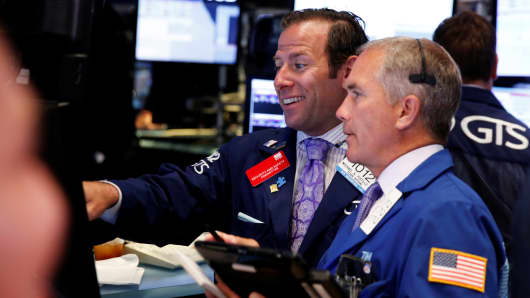
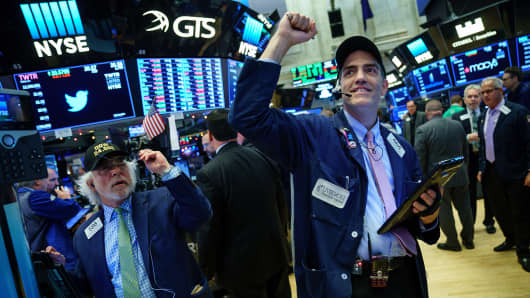
Traders work on the floor of the New York Stock Exchange shortly after the opening bell in New York.

Small-business confidence hits record high in 2018 after Trump tax-reform win


by
Small-business confidence is surging in 2018 as optimism rises among small-business owners about the newly enacted tax-reform package, according to the latest CNBC/SurveyMonkey Small Business Survey, released Tuesday.

The CNBC/SurveyMonkey Q1 Small Business Confidence Index saw an increase of five points, from 57 to 62, a record high and the largest quarter-to-quarter move the index has seen since CNBC and SurveyMonkey began measuring last year. This is the first survey since President Donald Trump signed the Tax Cuts and Jobs Act into law on December 22, 2017.

In the Q4 survey, small-business owners were split evenly on the core question about the effect that tax policy would have on their business. Opinions have shifted significantly: Twice as many now expect changes in tax policy to have a positive rather than negative effect on their businesses. Forty-six percent of those surveyed say tax policy changes will have a positive effect, up from 38 percent in the fourth quarter. The number of those saying tax policy changes will have a negative impact fell sharply, from 36 percent in the fourth quarter to 23 percent in the most recent survey.

Half of small-business owners are now expecting to see tax cuts in 2018.

Confidence rose among almost all demographic groups, with the largest increases coming from companies with five to nine employees, and small-business owners ages 35–44 and 55–64.

The CNBC/SurveyMonkey data underscores other polling from advocacy groups, including the
conservative lobbying group the National Federation of Independent Business. Its latest monthly optimism report for January 2018 showed the second-highest level of sentiment since Trump took office. The report also had its highest yearly average ever in 2017.

"These numbers are historically high," Juanita Duggan, president and CEO of the NFIB, told CNBC.

"This shows small-business owners are more than just optimistic, they are ready to grow their business."

The National Small Business Association, a nonpartisan lobbying group, also recently released its Year-End Economic Report for 2017, which found that more than half of small-business owners feel the national economy is doing better than it was just six months ago. This is compared to 43 percent who reported the same in December 2016, and only 20 percent in December 2015. In addition, 59 percent said they anticipate economic expansion in the next year, and more than one-third of small-business owners said they felt very confident about the future of their own business, the highest level in more than a decade.

"I think the jump in optimism isn't just due to tax reform, but largely due to the economy doing better," said Molly Day, vice president of public affairs for the NSBA. "Certainly, the tax-reform piece is helpful, but in reality I think small businesses are just now starting to digest what it means for their business."


Health care and hiring remain big challenges

Despite the optimistic outlook, challenges remain on Main Street. Small-business owners are looking to Washington for progress on additional issues, including health-care reform. CNBC and SurveyMonkey found that 30 percent of business owners say they want Congress to tackle health care, with 2 in 10 now reporting the cost of employee health care as the most critical issue facing their business. The NSBA's data also found the cost of health insurance to be the most significant challenge to the future growth and survival of small firms.

"I think that because of the cost of health care, hiring among the smallest businesses won't be changed significantly," Day said. She added that in the NSBA's opinion, tax reform isn't done.

"There was a tax cut, but very little was accomplished in terms of small-business parity with larger businesses," Day contended. "Complexity wasn't touched at all, and the administrative burdens of health care are actually a bigger problem for small firms than the financial cost of taxes."

She added: "The growing debt is still a major concern for small-business owners."

Another key area of concern for small businesses is finding skilled labor. In the NFIB's data, the quality of labor is now the top issue. Hiring is challenging, and more businesses are raising wages in order to hang on to the workers they have. The NFIB reports worker compensation is at its highest
level since 2000.

The CNBC/SurveyMonkey online poll was conducted Jan. 29 through Feb. 5, 2018, among a national sample of 2,080 self-identified small-business owners ages 18 and up, across a wide swath of industries. Respondents were selected from the nearly 3 million people who take surveys on the SurveyMonkey platform each day using its online polling methodology. Responses have a margin of error of +/- 3.5 percentage points.

The Small Business Confidence Index is calculated on a scale from 0–100 and is based on the responses to eight key questions. A zero indicates no confidence, and a score of 100 indicates perfect confidence.

YouTube to start labeling videos posted by state-funded media


YouTube will now add a label to videos that come from state-funded media outlets, the Google-owned company announced on Friday.

A notice will appear under the videos for any outlets that received some level of government or public funding. It will also include a link to the Wikipedia article about that broadcaster for viewers to glean more information about the news source.

"News is an important and growing vertical for us and we want to be sure to get it right, helping to grow news and support news publishers on YouTube in a responsible way," Geoff Samek, senior product manager for YouTube News wrote in a blog post published on Friday. "This work follows a series of changes we made throughout 2017 to better surface authoritative news content."

Company spokespeople said some labels will appear as soon as Friday, but added that the initiative is still new and developing.

In an example on the YouTube blog, a video from Radio Free Asia -- which is funded by the US' agency, the Broadcasting Board of Governors -- includes a note with an information symbol under the video but right above the title. "RFA is funded in whole or in part by the American government," it states.

Other outlets affected include PBS and the Russian-funded network, RT.

Spokespeople for YouTube said they consulted with third-party groups to draw up the list of outlets that will receive the label. It's not clear yet whether videos from certain shows such as Sesame Street, which airs on PBS, will also be labeled on YouTube.

The spokespeople also defended its decision to direct users to Wikipedia articles about the various broadcasters. Though Wikipedia articles can be edited by anyone, the spokespeople said they trust Wikipedia's editors to present an aggregate of information about the various outlets and their funding.

YouTube, along with other internet and social media companies, have faced increasing criticism over the past year for how they selectively filter content that comes from questionable sources, and those that promote propaganda or conspiracy theories.

A spokesperson for PBS pushed back YouTube's latest move, saying labeling "PBS a 'publicly funded broadcaster' is both vague and misleading."

"PBS receives a small percentage of its funding from the federal government; the majority of funding comes from private donations," the spokesperson said. "More importantly, PBS is an independent, private, not-for-profit corporation, not a state broadcaster. YouTube's proposed labeling could wrongly imply that the government has influence over PBS content, which is prohibited by statute. If YouTube's intent is to create clarity and better understanding, this is a step in the wrong direction. We are in ongoing discussions with YouTube on this issue, but we have yet to reach a satisfactory solution."

For RT, which has 2.2 million subscribers on its YouTube channel, the label is the latest in a series of obstacles the network faces in the United States as concerns grow over Russia's meddling in American politics.

In November, the Department of Justice forced RT to register as a foreign agent after the broadcaster was singled out in a intelligence community report issued early last year about Russia's attempts to influence the 2016 US election.

RT furiously protested DOJ's decision and in retaliation, Russian President Vladimir Putin signed amendments into law, passed by the Russian parliament in November, that will list foreign media outlets in Russia as "foreign agents," which could open foreign media outlets up to harsh audits and possible closure. Russian officials also sent letters to news organizations in Russia that are backed by the US government, warning them of possible "restrictions."

RT did not immediately respond to CNN's request for comment.

Part of Russia's new restrictions might include labeling content from American government-funded outlets like Radio Free Europe, Radio Liberty and Current Time television as coming from a "foreign agent."

The BBG did not immediately respond to a request for comment regarding the new YouTube label.
CNNMoney (New York)

Apple breaks record for biggest ever company profit despite iPhone sales fall


by
Apple has posted the biggest quarterly profit of all time despite a fall in iPhone sales.

The world's biggest company posted profits of $20.1bn (£14bn) in the crucial final three months of the year, breaking its own record set two years ago.

It came after the release of the £999 iPhone X in November, the biggest update of the handset to date, as well as the release of the iPhone 8 in September.

Although Apple sold 77m iPhones in the three month period, a 1pc fall from last year, the higher price of the new handsets meant revenues from selling iPhones increased.

iPhone X surpassed our expectations and has been our top selling iPhone every week since it shipped in November,” Cook said.

The company’s revenues grew 13pc to $88.3bn, also a record. The $20.1bn profits were up 12pc, from $17.9bn a year earlier.

Sales of the iPad increased marginally, while those of Apple's Mac computers fell. Sales of "other products" - a group that includes the Apple Watch and Apple TV - were up 36pc.

 
Shares initially fell in after-hours trading as Apple disappointed investors with its guidance for the next quarter, but rebounded soon after. The company said it expected revenues of between $60bn and $62bn, below expectations.

"We’re thrilled to report the biggest quarter in Apple’s history, with broad-based growth that included the highest revenue ever from a new iPhone lineup," Mr Cook said. He added that 1.3bn Apple devices are now in use, up from 1bn two years ago.

Cook said there had been a record year for the App Store, with augmented reality apps a particular area of growth. Sales of the new Apple Watch Series 3 were double those of the Series 2 last year.

Apple is the world's biggest company and is often tipped to be the first to break the one-trillion-dollar value mark, but shares have wavered in recent weeks amid fears that it may be cutting back iPhone X production.

The new handset, which boasts a bigger screen, no home button, and facial recognition technology, was well received by reviewers but costs up to £1,249 for its most expensive version. Apple said the decline in iPhone sales was largely due to the quarter being a week shorter than last year.

U.S. Jobless Claims Plunge to Lowest Weekly Tally Since 1973


By Katia Dmitrieva 

Highlights of Jobless Claims (Week Ended Jan. 13)

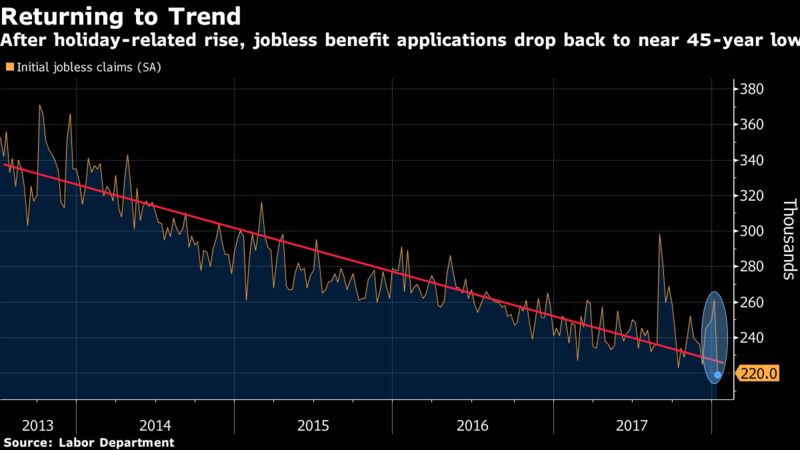
  • Jobless claims decreased by 41k to 220k (est. 249k); lowest level since Feb. 1973, biggest drop since April 2009
  • Continuing claims rose by 76k to 1.952m in week ended Jan. 6 (data reported with one-week lag)
  • Four-week average of initial claims, a less-volatile measure than the weekly figure, fell to 244,500 from the prior week’s 250,750
U.S. filings for unemployment benefits plummeted to the lowest level in almost 45 years in a sign the job market will tighten further in 2018, Labor Department figures showed Thursday.

Key Takeaways

The drop in claims shows that companies are increasingly holding on to their employees amid a shortage of skilled labor. Businesses are struggling to find workers to fill positions, particularly in manufacturing and construction, as cited in some anecdotes for the Federal Reserve’s Beige Book released Wednesday.

The figures suggest the unemployment rate of 4.1 percent, already the lowest since 2000, could be poised to decline further. The latest week for claims includes the 12th of the month, which is the reference period for the Labor Department’s monthly employment surveys.


Caveats for the latest numbers include the fact that the week was sandwiched between two periods containing holidays, when data tend to be more volatile. In addition, more states than usual had estimated figures.

Other Details

  • Prior week’s reading was unrevised at 261,000
  • Unemployment rate among people eligible for benefits rose to 1.4 percent from 1.3 percent in previous week
  • Claims were estimated for Arkansas, California, Hawaii, Kentucky, Maine, Puerto Rico, Virginia, Wyoming
  • New York’s unadjusted claims fell by 26,190 to 23,171; California’s estimated, unadjusted claims rose by 11,994 to 59,284
— With assistance by Chris Middleton, and Vince Golle

Stocks finish at record highs, S&P 500 has best start to a year since 1987

Economic optimism soars, boosting Trump's approval rating: CNBC survey

OPEC’s Clash With U.S. Oil Is Nearing Its Day of Reckoning


By Grant Smith
The clash between OPEC and America’s oil industry is reaching a day of reckoning.
The U.S. shale revolution is on course to be the greatest oil and gas boom in history, turning a nation once at the mercy of foreign imports into a global player. That seismic shift shattered the dominance of Saudi Arabia and the OPEC cartel, forcing them into an alliance with long-time rival Russia to keep a grip on world markets.

So far, it’s worked -- global oil stockpiles are draining and prices are near two-year highs. But as the Organization of Petroleum Exporting Countries and Russia prepare to meet in Vienna this week to extend production cuts, ministers have little idea how U.S. shale production will respond in 2018.

“The production cuts are effective -- it was absolutely the right decision, and the fact of striking a deal with Russia was crucial,” said Paolo Scaroni, vice-chairman of NM Rothschild & Sons and former chief executive officer of Italian oil giant Eni SpA. Nonetheless, “OPEC has not the same power. The U.S. becoming the biggest producer of oil in the world is a dramatic change.”

For OPEC members, the stakes couldn’t be higher. Saudi Arabia’s Crown Prince Mohammed Bin Salman is embarking on a radical economic transformation of the kingdom, including a partial sale of its state oil company that could be the largest public offering in history. Venezuela, reeling from years of recession and a crushing debt burden, is on the brink of political implosion.

Eroding Surplus

The producers’ efforts to clear the oil surplus are starting to pay off. They’ve drained excess inventories in developed nations this year by 183 million barrels, or more than half of the glut, which now stands at about 154 million barrels, according to OPEC data. That has revived London-traded crude futures, which sank below $45 a barrel this summer, to a two-year high of $64.65 on Nov. 7.
Click for a TOPLive Q&A with oil strategist Julian Lee at 9 a.m. New York time.

That success goes some way to countering accusations that OPEC had lapsed from the dominant market force of the 1970s and 1980s into irrelevance. Although its 14 members still pump 40 percent of the world’s oil, their share has dwindled from the days when OPEC held the global economy in thrall.

“People may have thought that OPEC was dead, but Saudi Minister Khalid Al-Falih has succeeded in building agreements and alliances within OPEC and non-OPEC, such as Russia, to restrain production,” said Luis Giusti, an adviser at the Center for Strategic and International Studies and former CEO of state-run Petroleos de Venezuela SA.

Price Paradox

There are even signs that OPEC’s opponents, the dozens of drillers tapping shale-oil deposits in Texas and North Dakota, are losing momentum. Companies may have already squeezed costs and maximized productivity as much as possible, and their investors are finally insisting profits are returned to them rather than re-invested in more drilling.

Mark Papa, CEO of Centennial Resource Development Inc. and considered one of the industry’s founders, said in September that shale “is not nearly the Big Bad Wolf that everybody thinks.”

A year-long ramp-up in drilling by American operators appeared to hit a plateau in July, data from Baker Hughes Inc. shows, and companies such as Pioneer Natural Resources Co. have lowered their output targets.

The outlook for shale is so clouded that when OPEC officials invited industry experts to brief them on the topic last week, they were disturbed by the diversity of opinions. Veteran crude trader Andy Hall, whose decision to close his main hedge fund this year was partly driven by shale’s unpredictability, told the organization that 2018 growth estimates vary from 500,000 barrels a day to 1.7 million a day.

Yet, the basic paradox confronting OPEC is that the more it succeeds in bolstering prices, the more it emboldens shale explorers and other competitors, said Mike Wittner, head of oil market research at Societe Generale SA in New York.

Increases in U.S. oil production next year will be big enough to cancel much of the sacrifices made by OPEC and Russia, leaving the surplus more or less intact, forecasts from the International Energy Agency show. The recent rebound in prices could energize shale even further.

Instead of being able to declare victory next year and restore the production they’ve halted, OPEC may find itself trapped in an open-ended struggle, Wittner said.

Catch-22

“Now that they’re in it, I don’t see how they get out of it,” said Wittner. “They need to continue supply management for the foreseeable future.”

The need to cooperate indefinitely could strain the Saudi-Russia partnership.

While the Saudi-Russia alliance has allowed them to call a “truce in the battle for market share,” they may end up fighting over customers again when faced with a relentless tide of crude exports from the U.S., said Ed Morse, head of commodities research at Citigroup Inc. in New York.

With U.S. crude exports climbing from close to zero three years ago to now exceeding the combined shipments of OPEC’s smallest members, it increasingly looks as if the face-off between the cartel and what was formerly its biggest customer “has an endgame,” Morse said.

“And the endgame is there’s an awful lot of shale in the world.”

U.S. New-Home Sales Unexpectedly Rise to Highest in a Decade

Updated on
U.S. purchases of new homes unexpectedly advanced in broad fashion last month, reaching the strongest pace in a decade and offering an encouraging signal for residential construction, according to government data released Monday.

The report showed the U.S. South region continued to recover from a pair of hurricanes. Purchases in other areas of the country, including a 17.9 percent surge in the Midwest, also climbed.
The number of properties sold in which construction hadn’t yet started reached the highest level since January 2007, signaling residential construction will accelerate in coming months.

A steady job market and low mortgage costs are helping propel demand for real estate and pushing up property prices. At the same time, it’s a hurdle for some prospective buyers, especially younger Americans and those entering the market for the first time. The average selling price in October reached a record high $400,200, probably reflecting construction of higher-end homes.
New-home sales, tabulated when contracts get signed, account for about 10 percent of the market. They’re considered a timelier barometer than purchases of previously owned homes, which are calculated when contracts close and are reported by the National Association of Realtors.

Other Details

  • Number of homes sold but not yet started rose to 247,000 in October from 184,000; another 221,000 dwellings sold were already under construction
  • Commerce Department said there was 90 percent confidence that the change in sales last month ranged from an 11.8 percent drop to a 24.2 percent increase, underscoring the volatility of the data
  • Report released jointly by the Census Bureau and Department of Housing and Urban Development in Washington
— With assistance by Kristy Scheuble


Tharaldson hits billionth gallon of ethanol, announces expansion


CASSELTON, N.D. — Tharaldson Ethanol on April 5 quietly marked its 1 billionth gallon of fuel ethanol production. The Casselton, N.D., company also announced it will increase annual production this year, making it the sixth largest ethanol producer in the United States.

They'll increase by 180 million gallons — a 7 percent increase this year, but up 38 percent from its original design in 2008. The increase will be due to some changes in fermenters and cooling towers. The investment is expected to cost $2.5 million to $3 million.

Gary Tharaldson is owner of Tharaldson Motels II, Inc., of Fargo, which built the plant nine years ago. The plant grinds roughly 60 million bushels of corn a year, about 90 percent of which comes from a 60-mile radius of the plant.

"We're good for the area — good for the farmers; they're good for us," Tharaldson said, accompanying visitors for a tour of some new construction on the day of the milestone. Tharaldson said the plant's success allows it to be a good community citizen. The company recently announced it will put $1 million into Casselton Public School's athletic facilities.

Initially, the hotels were funding the ethanol industry foray, but now it's the other way around.
Hotel-ethanol

Tharaldson is a self-made businessman. He started buying motels in 1982 and has built more than 400 motels. He sold one portfolio of 200 hotels to the employees. He built another portfolio of 143 motels and sold them to Goldman Sachs Group, Inc., in 2006 for $1.3 billion and used some of that cash to build the ethanol plant in 2008.

Initially, Tharaldson consulted with Harold Newman, a Jamestown, N.D., billboard marketer who, with his family, owned and ran the Alchemy Ltd. ethanol plant at Grafton, N.D.

"He was always telling us what a good deal ethanol was back in those days," Tharaldson said.

Ethanol plants then were making $1 a gallon profit. Casselton had rail, natural gas and access to water through Fargo.

Ryan Thorpe, chief operating officer of the ethanol company, said the plant is among the top 10 percent for efficiency and profitability in the country.

"It's all about continued improvement every day," Thorpe said. "We want to be the low-cost producers. North Dakota this year produced as much corn as Ohio. The technology has come a long way—the farmers, the seed companies."

Cutting cost
Ryan Carter, general manager for the plant, said the plant is already in the top 5 to 8 percent of the country's ethanol plants for efficiency, measured by cost per gallon of ethanol and ethanol per bushel of corn.

Since 2011, the company has improved from 46 cents a gallon in production costs to 27 cents. The addition may yield an additional 1 percent efficiency, which involves both the ethanol and corn oil and distiller's grains. A penny a gallon increase is $1.8 million.

Along with improving efficiency, the company also increased output, climbing in 2013 from 130 million gallons to 153 million gallons, followed in 2016 by an increase to 168 million gallons.

The company in 2016 also socked $25 million into replacing the dryers they'd initially installed.

"Initially, we'd tried a new technology (for distillers grain) drying that is used in the sugar beet industry — a fluidized steam bed dryer," Thorpe explained. "They're very efficient and it would have been a game-changer for the ethanol industry if we'd gotten it to work. We tried it for a year, but distillers grains have a different bulk-density than beet pulp and we had to — unfortunately — scrap that dryer." They installed drying equipment made by ICM Inc., of Colwich, Kans.

Dried distillers grains make up about 20 percent of Tharaldson Ethanol's revenues. The distillers grains are a co-product that starts out at 68 percent moisture — two-thirds water — and must be dried to about 10 percent moisture.

DDGs generally trade at about 85 to 90 percent of the value of standard No. 2 yellow corn. In the past, the DDGs have been as high as 130 percent of the corn price. The ratios are affected by the trade and production policies of countries like China, Thorpe said.

The plant has made money in all but 2009 and 2012 — two years out of nine. The most profitable years were 2013 and 2014 when corn was at its most expensive, he said.

"The price of ethanol is more a function of the price of gas and how people are driving," Thorpe said.
Ethanol-hotels

Tharaldson operates 35 hotels and has nearly 60 under various stages of development. The ethanol plant contributes to 20 to 25 percent of the equity the company needs for new motels, if he opens 20 new hotels a year, he said.

"We want to have 40 opened by the end of the year and 120 opened within four years," Tharaldson said. "The next four years are heavy growth years for us."

After that, will there be an ethanol expansion? Perhaps elsewhere?

Thorpe says the company is unlikely to expand production at Casselton again. It might be possible to expand elsewhere, but the company isn't actively seeking those opportunities.

The future looks bright, he said.

President Donald Trump has made statements supporting the ethanol industry.

"I envision he will keep that promise," Thorpe said, adding that the current oversupply of corn in the U.S. and the world makes ethanol fuel "the cheapest molecule you can put in your fuel tank."

Sixth largest ethanol plant
With its latest expansion, Tharaldson Ethanol of Casselton, N.D., will rank sixth among plants of its type in the U.S., although competitors often make similar expansions.

Production figures are often private, but here are ratings published in trade journals:
1) ADM — Cedar Rapids, Iowa: 515 million gallons.
2) ADM — Decatur, Ill.: 365 million gallons.
3) ADM — Columbus, Neb.: 350 million gallons.
4) Cargill — Blair, Neb.: 190 million gallons.
5) ADM — Peoria, Ill.: 185 million gallons
6) Tharaldson — Casselton, N.D.: 180 million gallons.

Murdoch & Sons: Lachlan, James and Rupert’s $62bn empire

As the world’s most influential media mogul nears his 86th birthday, his sons have stepped up to steer the family business. But can they ever escape their father’s shadow?

On a cold winter morning last month, James Murdoch took to the stage at a digital media conference in a skyscraper overlooking Central Park and sat down on a beige sofa. The room was packed — members of the Murdoch family tend to draw a crowd. Dressed in the media CEO uniform of jeans, suit jacket and open-necked white shirt, he deftly parried questions about the political leanings of the Fox News Channel. Asked if the network was, as its slogan claims, “fair and balanced” — a question that elicited some giggles from the audience — Murdoch pointed to the difference between its news reporting and its opinion shows, where conservative warriors such as Bill O’Reilly command big primetime audiences.

If Rupert Murdoch’s second son was nervous about the multibillion-pound deal he had been secretly putting together — a deal that would reignite a political storm dating back to the 2011 tabloid phone-hacking scandal — he certainly didn’t show it.

Less than 48 hours later the news was out: 21st Century Fox, the entertainment company run by James and jointly chaired by his elder brother, Lachlan, and their father, announced an £11.7bn proposal to buy the 61 per cent of Sky that it didn’t already own. Critics ranging from former Labour leader Ed Miliband to Hacked Off, the press reform pressure group, immediately spoke out against it, citing the behaviour of Murdoch-owned tabloids during the phone-hacking scandal. The Guardian ran an editorial with the headline: “The fox is in the henhouse again”, and more than 100,000 people signed a petition urging the government to refer the proposed takeover to Ofcom, the UK media regulator. “Rupert Murdoch . . . already has too much influence over our news,” the petition stated. 

“This new power grab would give him even more.”

This is the second time the Murdochs have tried to buy all of Sky, having withdrawn their first bid almost six years ago in the face of public outrage around the hacking scandal. It is unclear if they will succeed this time around, although executives inside Fox are privately confident. What is more certain is that a gradual transfer of power from Rupert Murdoch to his sons, a process that began when he gave them big new jobs in the summer of 2015, is picking up pace.

When Fox confirmed a week after the Business Insider conference that it had made a formal offer to Sky about a takeover, it was James and Lachlan who laid out the company’s plans on a call with investors: Rupert, the press baron who founded British Sky Broadcasting in 1989, was absent. When the former Fox News presenter Gretchen Carlson sued the channel’s chairman Roger Ailes for sexual harassment last summer, it was James and Lachlan who swiftly authorised an independent investigation by an outside law firm into the allegations — something that led to Ailes being forced out of the network he had founded 20 years earlier. Rupert, returning from a holiday with his new wife Jerry Hall, joined the discussions later. 

This is not to say that the 85-year-old Rupert has detached himself from the empire he spent more than half a century assembling. In some respects, he has more direct involvement now than he has had in years. He has been running Fox News since Ailes’s departure (a permanent successor has yet to be found) and was also closely involved in coverage of the Brexit campaign at The Sun, Britain’s best-selling daily newspaper. Still, 18 months after he began the orderly transfer of power to his sons (there was no official role for Elisabeth, his daughter) James and Lachlan, 44 and 45, are making their mark.

The brothers oversee an enviable collection of businesses — a movie studio, cable channels and a publishing house worth a combined $62bn. But that does not mean they have nothing to worry about. 

Their newspapers have been walloped by an industry-wide collapse in print advertising, while Fox’s television networks are grappling with the “cord-cutting” phenomenon — the cancellation of pricey cable subscriptions by a generation that prefers binge-watching on demand. For owners of channels such as Fox that means fewer viewers and pressure on advertising.

The competition is also beefing up. Time Warner, one of Fox’s main rivals and the owner of HBO, CNN and Warner Bros, has agreed a blockbuster $85.4bn sale to AT&T, which will create a giant that dwarfs Fox. If it is cleared by regulators, the combined company will be able to deliver Time Warner movies and TV programming direct to more than 160 million AT&T customers around the US — something Fox is currently unable to do.

Add these challenges to the scrutiny and opposition that their Sky deal will generate and the younger Murdochs find themselves in a challenging environment. Their father overcame considerable obstacles to become the world’s most influential media mogul, battling political establishments on both sides of the Atlantic and making risky bets along the way, buying The Sun, launching Sky and Fox News, to name but three. The question now facing James and Lachlan is this: do they have what it takes to fill his shoes?

Like any family, the Murdochs have had their share of rows. The difference is that the Murdochs control a vast array of global businesses and brands, so, if and when they fall out, the stakes are somewhat higher. “It’s like Game of Thrones,” says one person who knows them well. “Or The Hunger Games.”

In 2005, Lachlan abruptly left a senior position in New York running News Corp’s television stations and moved to Australia. The catalyst for his departure may have been Rupert siding with Roger Ailes over him in a programming-related matter. The decision would not have been taken lightly: his exit appeared to end his chances of one day succeeding his father. Rupert had once remarked that of all his children, Lachlan was his most likely successor because, “He was the one who was always most interested . . . when he was a 13-year-old kid, he worked as an apprentice with the printers in the pressroom, cleaning all the oil and the grease off the press.”

When Lachlan returned to Australia, he embarked on several new business ventures — including investing in Nova Entertainment, a radio group. He had started his career in Australia in the mid-1990s, where he learnt the ropes at News Corp’s print and broadcast operations. Then, in 2000, he led an investment by News Corp in REA, an Australia-based real estate listings company. The company later increased its stake to 61 per cent, paying a total of about $100m. Today, News Corp’s investment is worth more than $3.3bn.

With a tribal tattoo on his left forearm, Lachlan is not as buttoned-up as the typical corporate executive. Passionate about photography, mountain climbing and the great outdoors, he returned to Fox in 2015 after a decade in Australia, driving on to the company’s studio lot in Los Angeles in a pick-up truck.

According to Peter Macourt, the former chief operating officer of News Corp Australia who worked closely with him in the late 1990s and early 2000s, Lachlan shares many traits with his father. “They are both very open and like to get people’s views,” he says. Lachlan wasn’t someone to rush around barking orders. “It was always a two-way conversation rather than a dictatorial way of approaching management.”

There has always been a competitive streak to Lachlan and James, who are 15 months apart in age, but close observers say there have been no real fireworks since James was made Fox chief executive and Lachlan chairman (alongside his father) in the summer of 2015. “I don’t think they are close but I don’t think they are fighting,” says one. A colleague puts it more bluntly. James and Lachlan “are figuring out how to get along. It’s not a secret that they are not big fans of each other.” One person close to Fox insists the brothers’ relationship is good. “The family had some complicated issues years ago but are in a great place now.”

James did not always seem destined for a career in the family business. He attended Harvard as an undergraduate, where he contributed to The Harvard Lampoon magazine, writing a comic strip called Albrecht the Atypical Hun. He left before finishing his degree and started Rawkus Records with two friends: the label, located between a falafel restaurant and a porn shop in New York’s Tribeca district, would claim a place in hip-hop folklore because of the role it played in launching several top acts, including Mos Def and Talib Kweli. News Corp ultimately acquired Rawkus and, while James no longer has any direct involvement in it, he continues to be interested in hip-hop. He raved to me about Hamilton, Lin-Manuel Miranda’s acclaimed hip-hop musical, shortly after its Broadway debut in 2015 and urged friends and colleagues to see it. 

Jason Hirschhorn, who now runs the MediaREDEF news letter, first met James Murdoch at Horace Mann School in New York. “His first day on the bus he had a shaved head and an earring,” he tells me. “He was reading Catcher in the Rye and wearing Chuck Taylor sneakers.” The two bonded over a shared love of sneakers and are friends to this day: Hirschhorn, who has worked at MTV and was co-chairman of MySpace, says James understands that content and distribution “are being married together” and that Fox content “has to be where the audience is”.

The brothers may have the top two jobs at Fox but it was their older sister, Elisabeth, who was once the favourite to get a big role running the family businesses. The 48-year-old is a seasoned executive and founded Shine, the independent television group behind MasterChef, which was later acquired by Fox. Her father admired what she had achieved but their relationship soured during the phone-hacking scandal. She was critical of James’s and Rupert’s response to the unfolding drama, which upset Rupert, who expected her to stand with the family, according to an insider. Elisabeth distanced herself further in her 2012 MacTaggart lecture at the Edinburgh television festival in which she criticised aspects of James’s lecture at the same venue three years earlier and defended a regular Murdoch punchbag — the BBC.

Murdoch’s increasing hostility to Elisabeth’s then husband, the London PR man Matthew Freud, complicated matters. People with knowledge of the situation say that Freud’s ongoing friendship with Tony Blair angered Rupert after allegations emerged that Blair may have had an affair with Murdoch’s ex-wife, Wendi. Freud and Elisabeth separated in 2014 and friends note a marked improvement in her relationship with her father. They spent part of last summer and Christmas together and are said to be the closest they have been in years. 
Elisabeth Murdoch was critical of James’s and Rupert’s response during the phone-hacking scandal
Still, the chances of her returning to the fold with a formal role look remote. In a 2015 interview with the Hollywood Reporter, James said Elisabeth’s decision to leave Shine after it had been acquired by Fox was a “regret”, adding: “We’re a close family but she’s doing other things now.” A source told me Rupert would “love to have her back in” but the word from people who know Elisabeth is that she has no interest in returning.

It has been 18 months since the brothers were given their new roles and the verdict from people who know them is that so far they have handled the transition well. “They are well suited to assuming the mantle and will do a very good job,” says Sir Martin Sorrell, chief executive of WPP, which buys advertising for its clients at News Corp titles and on Fox channels. He has known the family for years. “It’s a triumvirate, because Rupert is still very much involved. I’m told he was in the office every day over Christmas.” Triumvirates are not common at the head of large companies for good reason: someone needs to take responsibility for the big decisions. Lachlan is the co-chairman of News Corp alongside his father, but former Times and Wall Street Journal editor Robert Thomson, who is its chief executive, makes day-to-day decisions. “[At Fox] the way it tends to work is that the movie studio is Lachlan and Rupert, anything to do with international television — Sky, Star — is James,” one executive says. “Then a little bit of the US television stuff is up for grabs except Fox News, which is all Rupert.”

A person close to Fox puts it differently, saying major decisions are made jointly: “It is a true partnership between Lachlan and James.” Another executive scoffs at this: “The big issue is the dynamic between the three of them . . . it’s very weird,” he says. They are rarely together in one place: Lachlan works out of the Fox studio in LA, while James is at the building it shares with News Corp in midtown Manhattan. (He is also developing a property that a colleague describes as an “end-of-times house”, with its own water and solar power supply, in a remote part of Canada.) “What they haven’t worked out is a clear line of authority,” the executive continues. “It’s really management by committee or James and Lachlan trying to get Rupert to agree to something.”

The brothers will manage the Sky bid with the aim of avoiding the fate of the last offer they made for the company. Back in 2010, the family couldn’t have handled things much worse, according to Claire Enders, the media analyst. She points to the aggressive posture taken at the time, particularly by James, who in his 2009 MacTaggart lecture lambasted the BBC, calling the scale of its activities “chilling” and describing the regulation of UK broadcasting as “authoritarianism” that limited choice and freedom of expression. This disdain carried over into the first Sky bid a year later, with “hectoring” phone calls by the Murdoch camp to government ministers, Enders says. It was, she goes on, “an extraordinary farce”.

The bid this time has been made in less charged circumstances. There has been no antagonism towards Ofcom or the government and no backdrop of a criminal investigation. “The previous bid was highly politicised but this bid is very deliberately not politicised at all,” says Enders. The Murdochs, she adds, “are being patient and understanding and they are not hectoring”. 

David Yelland, a former editor of The Sun who now runs Kitchen Table Partners, a communications firm, agrees there has been a change of tone. “I don’t think they’ve ever done a better-timed transaction and they’ve done it in the right way.” He says Fox and News Corp are using more professional advisers and that corporate governance standards at the two companies have improved. 

“There used to be people who ran Sky who would get calls from Rupert and he would tell them about something Sky was going to do. And they would say: ‘Great, have you spoken to the board?’ And he would say: ‘I am speaking to the board, aren’t I?’”

The Sky offer that landed just before Christmas has an air of inevitability about it, Yelland suggests. “It could have been incredibly controversial but by the time it got dark in London that night you knew it was a done deal.”

Not everyone shares this view and there are plenty of people for whom phone-hacking memories still linger. Ed Miliband was leader of the Labour party in 2011 when what had been a minor scandal about a few rogue tabloid journalists erupted into global outrage about institutional corruption at UK tabloid newspapers. The catalyst was The Guardian’s revelation that journalists at the News of the World, Murdoch’s best-selling Sunday tabloid, had hacked the voicemail of Milly Dowler, a murdered schoolgirl. With his empire in crisis, Rupert Murdoch closed the newspaper.

The revulsion at the time was widespread and focused attention on the contentious bid for Sky. 

Miliband led the attack, tabling a motion in the House of Commons calling for the bid to be blocked. 

It was unanimously approved by MPs. The Murdochs dropped the bid and, in that same summer of 2011, James and Rupert appeared in front of a House of Commons select committee, where they apologised for the phone-hacking scandal. Rupert told the committee it was “the most humble day of my life”.

Miliband is incredulous that the Murdochs have come back for a second tilt at Sky. “Politicians from all parties agreed that phone hacking and the events that had taken place at Murdoch newspapers were shocking and shouldn’t be allowed to happen again,” he told me. “Here we are six years later and they think they can come back and try and take over Sky again as if nothing ever happened.”

He points to a 2012 report by Ofcom into whether Sky was sufficiently “fit and proper” to hold a broadcasting licence. This was before the Murdochs had split their assets into two companies, so all of their businesses and investments — including the 39 per cent stake in Sky — were at that point housed within News Corp. The Ofcom report concluded that Sky was indeed fit and proper but censured James, who was then running News Corp’s UK arm, saying he “repeatedly fell short of the conduct to be expected of him as a chief executive officer and chairman”.

“It was clear from the Ofcom report that its basis for ruling Sky to be fit and proper to hold a licence was that the Murdochs were minority and not 100 per cent owners — and that James was not in an executive role,” Miliband says. “What we see now is James is the chief executive of Fox and that the Murdochs are trying to take full control of Sky. Ofcom has a continuing duty to assess fitness and it seems to me that it should revisit that report given the changing circumstances.”

Miliband and other opponents of the new offer, such as deputy Labour leader Tom Watson, have also voiced concerns that the sale would threaten media plurality: in other words, it would concentrate ownership and reduce the diversity of views in the marketplace. Fox insiders disagree and say the media landscape has shifted significantly since 2011. Platforms such as Facebook and Google now dominate the distribution of online news, while a new generation of digital publishers that includes BuzzFeed, Vox and Vice attracts large audiences.

Fox executives are also privately confident about their chances because the company has not owned newspapers since its demerger with News Corp in 2013. And yet the family that ultimately controls those two companies is still the Murdochs. Miliband says the deal cannot be allowed to proceed. 

“This is a big test of government and regulator. Will they act without fear or favour, even in the face of such a powerful company? The Murdochs may think that this will be waved through by a friendly government. I intend to give them a run for their money.”

There is little doubt that the Murdochs are using different tactics this time, with Rupert assuming a much lower profile. It is unclear if this is by default or design: elsewhere in his companies he has been more engaged than ever. He was in The Sun newsroom on a near daily basis in the weeks leading up to the Brexit referendum and was often spotted in the office of the editor, Tony Gallagher. 

He has always taken a close interest in the layout, design and content of the paper and, in Gallagher, has someone who shares his view that Britain will be better off out of the EU. While The Sun backed Brexit, The Times, another News Corp paper, did not: Murdoch was decidedly unhappy about the editorial line it took and made his feelings known, according to another insider.

He was even more hands-on at Fox News after Ailes was forced out last summer, stepping in as interim chief executive — a position he continues to hold — and leading the network through its coverage of the presidential election. Alongside Brexit the Trump victory must have ranked, according to Yelland, as “the two great moments for Rupert as a populist.”

Recent moves show that Rupert has his eye on the next four years and the Trump administration. 

When, after a public spat with Trump, Fox News star Megyn Kelly left the network this month for a lucrative deal at NBC, it was Murdoch who selected her replacement, Tucker Carlson, to take Kelly’s coveted 9pm slot. 

Wedged between Bill O’Reilly at 8pm and Sean Hannity at 10pm, it means that the network’s three primetime hours are now hosted by pro-Trump presenters. Compared with its rivals CNN and MSNBC it also devoted less time to last weekend’s anti-Trump women’s marches, with its pundits dismissing their significance. “The reason you get big marches in cities is that’s where the left lives,” said one presenter, Greg Gutfield.

Murdoch is in regular contact with Trump, according to two people familiar with the situation, and is also friendly with Ivanka, the new president’s daughter, and her husband, Jared Kushner, the top Trump adviser who helped steer the winning campaign. New York Magazine recently reported that Trump had asked Murdoch to suggest candidates to run the Federal Communications Commission, which regulates the media industry — and which is likely to scrutinise the AT&T-Time Warner deal. 

Murdoch had, in return, requested restrictions on AT&T’s proposed purchase of Time Warner, the magazine claimed. A Fox spokesperson declined to comment.
James told more than one friend of his dismay at the Trump presidency
Murdoch’s support for Trump distinguishes him from some of his children, including James, who told more than one friend of his dismay that his father was backing the Trump candidacy. James’s wife, Kathryn, backed Hillary Clinton during the campaign and has been a vocal critic of the new president on Twitter. In September Kathryn tweeted: “A vote for Trump is a vote for climate catastrophe”, while on the night of the president’s stunning election victory she wrote: “I can’t believe this is happening. I am so ashamed.”

James and Kathryn are committed environmentalists: she is on the board of the Environmental Defense Fund, which a Fox News report recently labelled a “leftwing group”, while James wrote in The Washington Post in 2009 that “conservation-minded conservatives” were “missing in the heated partisanship of today’s politics”.

“His passion for the environment is real,” says Gary Knell, president and chief executive of the National Geographic Society. It recently expanded an 18-year partnership with Fox that gives the Murdoch company effective ownership of the society’s publications and cable channels. National Geographic, which champions science and conservation, is an unusual stablemate for Fox News, where Greg Gutfield said on air last year that public figures such as Alec Baldwin who had spoken out about climate change had “a lot in common with Isis because they . . . want to go back to the seventh century”.
I don’t think anyone wants to acknowledge that he is about to be 86 years old
A Murdoch family friend
Knell is unconcerned. “There may be parts of the organisation I don’t agree with but my view is that a company like Fox has partnered with us to expand our scope and that works fine,” he told me. “I can tell you personally that I wouldn’t have suggested the deal to our board if a [prospective] co-owner did not respect science or the environment.” He says James attended the White House screening of Before the Flood, a documentary on climate change that National Geographic produced. 

“We did a [magazine] issue on global warming and climate change and [James] told us that he reads the magazine with his kids,” Knell says. “Lachlan has been very supportive as well.”

Their father has a rather different view of climate change. In 2015, when he was still using social media, Rupert tweeted that he was a “climate change skeptic, not a denier”. He — and Fox News — also differ with younger members of his family when it comes to Trump. A senior Murdoch executive tells me there is no pressure to fall into political line. “You don’t have to agree with Rupert. During Brexit, there were people around who were passionately for the Remain campaign.” This is true of the Fox movie studio too, where most employees are Democrats. “We are all united by our anti-establishment beliefs,” the executive says. “I’m not sure it’s a bad thing if people disagree with each other.”

Rupert may have taken a backseat role in the Sky deal but he still rules the roost. He personally selected former DreamWorks chief executive Stacey Snider as the new chairman of Fox’s movie studios. An insider says Rupert was lobbied to appoint her by David Geffen and Jeffrey Katzenberg, two of Hollywood’s most influential players and the co-founders of the DreamWorks movie studio alongside Steven Spielberg.

Rupert also has the last word on the biggest decisions. Sky was among several companies exploring an offer for Formula One last autumn when Chase Carey, Rupert’s former top lieutenant at Fox — and a Sky board member — asked to be recused from board meetings. Carey had been approached by John Malone’s Liberty Media to run Formula One if its own offer was successful and wanted him to join its bid. James, who was intent on buying Formula One, didn’t want Carey to do so. But Rupert didn’t object. That Carey left “tells you Rupert still calls the shots”, says one person familiar with what happened. Liberty won the bid: Carey, now installed as the new Formula One CEO, is drawing up grand plans to overhaul the sport.

For how much longer Rupert will be able to call the shots is unclear. “I don’t think anyone wants to acknowledge that he is about to be 86 years old,” a friend says. “The big question is going to be what happens when he steps aside.”

There are other pressing questions. The proposed AT&T-Time Warner deal, if approved, poses a clear competitive threat. Fox’s purchase of Sky will give it similar direct access to millions of consumers in Europe — assuming the deal is cleared. But Fox still lacks a direct route to viewers in the US, the world’s biggest media market, which means it will continue to be beholden to the cable and satellite companies that distribute the channels that make up the bulk of its profits.

Fox does own a stake in Hulu, a video-streaming service that has more than 12 million paying subscribers in the US and which is about to launch a virtual cable service — a collection of broadcast and cable channels bundled together and accessed over the internet. Viewers will be able to subscribe to the Hulu live service without having to shell out for cable or satellite television. Fox has high hopes but it only owns 30 per cent of Hulu, as do Disney and NBCUniversal, with Time Warner owning the rest.

Buying all of Hulu would be tricky, given that its co-owners are rivals, but if the future of media is about selling subscriptions directly to consumers then Fox doesn’t have many other options. Another possibility — following Time Warner’s example and selling itself to a big telecoms company — is unlikely to be considered. “Do you really want to be James and Lachlan and say: we’re the guys who decided to sell the family company?” one friend says.

Whatever they decide, the younger Murdochs have their work cut out if they are to emulate their father who, more than 60 years since he started out in Australian newspapers, still has a feel for the popular pulse like nobody else. “Like it or loathe it, it’s all swung Rupert’s way,” says one colleague, pointing to the role Fox and News Corp outlets played in the votes that upended the American and British political establishments last year. “The access, the influence . . . it’s all there.”

Matthew Garrahan is the FT’s global media editor
Illustration by Hellovon
Photographs: Austin Hargrave/August; Bloomberg; Getty; AFP