Feedzilla

Tsarnaev guilty in Boston bombing on all 30 counts!

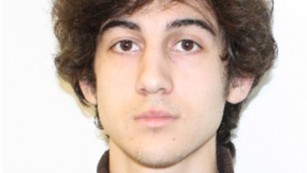
This image of Dzhokhar Tsarnaev, was released by the FBI in April 2013.
Boston (CNN)[Breaking news update, posted at 2:32 p.m. ET]
Jurors in the Boston Marathon bombing trial have found Dzhokhar Tsarnaev guilty of all 30 counts that carry a possible penalty of death.

The jury determined that he's responsible for the deaths of Krystle Campbell, Martin Richard, Lingzi Lu and Sean Collier.

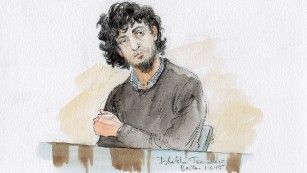
Tsarnaev stood with his head bowed and his hands clasped as the verdicts were read.

So far, Tsarnaev has been found guilty of, among other things:
• Conspiracy to use a weapon of mass destruction resulting in death, a charge that carries a possible penalty of death;
• Using a weapon of mass destruction resulting in death, and aiding and abetting, a charge that carries a possible penalty of death;
• Using or carrying a weapon in relation to a crime of violence;
• Conspiracy to bomb a public place;
• Bombing a public place;
• Conspiracy to maliciously destroy property;
• Malicious destruction of property by means of an explosive;
• Use or possession of a gun in relation to a crime of violence.

[Breaking news update, posted at 2:19 p.m.]
So far, jurors have found Dzhokhar Tsarnaev guilty of 10 of 30 counts. The verdict still is being read.
[Breaking news update, posted at 2:13 p.m.]
Jurors in the Boston Marathon bombing trial have found Dzhokhar Tsarnaev guilty of using a weapon of mass destruction resulting in death, and aiding and abetting, a charge that carries a possible penalty of death.
[Breaking news update, posted at 2:12 p.m.]
Jurors in the Boston Marathon bombing trial have found Dzhokhar Tsarnaev guilty of conspiracy to use a weapon of mass destruction resulting in death, a charge that carries a possible penalty of death.
[Breaking news update, posted at 2:09 p.m.]
The jury has been brought into the courtroom. The verdict is expected to be read shortly.
[Breaking news update, posted at 1:53 p.m.]
A verdict has been reached in the Boston Marathon bombing trial.
The jury deliberated for 11½ hours before reaching Wednesday's verdict.

[Original story, published at 9:50 a.m.]
Jurors in the trial of accused Boston Marathon bomber Dzhokhar Tsarnaev asked the judge two questions Wednesday, looking for guidance on key decisions in the case.

The jury asked whether a conspiracy can pertain to either a sequence of events or a single event.

"Conspiracy is an agreement between two people to commit unlawful acts," U.S. District Judge George O'Toole replied. "The scope of a conspiracy and the duration of a conspiracy are questions of fact for you to determine."

The second question was about the difference between aiding and abetting. The judge said aiding and abetting is a single concept, and that to aid and abet is to help someone intentionally commit a criminal offense.

The jury resumed deliberations Wednesday morning after seven hours of deliberations Tuesday, which followed weeks of dramatic and emotionally wrenching testimony.

Tsarnaev, 21, could face life in prison or the death penalty.

On Monday, the jury saw a video of the moment a bomb exploded and disemboweled an 8-year-old boy and ripped the leg off his sister. The blast killed a 23-year-old graduate student from China. The jurors heard more horror from April 15, 2013. At one point, prosecutors played a video that showed the scene after a bomb exploded -- blood and injured victims everywhere and the sounds of a child howling. His mother lost her leg.

"The defendant brought terrorism into the backyards and main streets," Assistant U.S. Attorney Aloke Chakravarty said. "The defendant thought that his values were more important than the people around him. He wanted to awake the mujahedeen, the holy warriors, so he chose Patriots' Day, 
Marathon Monday," a time for families to gather and watch the marathon.

Tsarnaev's defense attorney Judy Clarke tried to persuade jurors that her client's older brother, 26-year-old Tamerlan Tsarnaev, who died in a shootout with police days after the terror attack, was the instigator of the marathon plot. The younger man, Clarke said, was only following his older brother.

"If not for Tamerlan, it would not have happened," Clarke argued.

Bomb survivors and victims' family members wiped away tears and comforted one another in court.
Tsarnaev fidgeted at the defense table as he has done throughout the trial.

Bill Richard, father of bomb victim Martin Richard, 8, craned his neck to watch Tsarnaev as the prosecutor spoke.
Reporter: Jury may think life sentence worse than death

Reporter: Jury may think life sentence worse than death

Dzhokhar Tsarnaev "chose a day when the eyes of the world would be on Boston," Chakravarty said. 

"He chose a day when there would be civilians on the sidewalks, and he targeted those civilians: men, women and children."

The lawyer waited a beat.

"He wanted to terrorize this country. He wanted to punish America for what it was doing to his people."

The prosecutor showed a picture of Dzhokhar Tsarnaev and his brother, Tamerlan, in the marathon crowd.

The day of the bombings, Chakravarty said, "they felt they were soldiers. They were the mujahedeen and they were bringing their battle to Boston."

The counts and possible consequences

Tsarnaev is accused of 30 counts, including setting off weapons of mass destruction at a public event as an act of terrorism. Seventeen of those counts carry a sentence of death or life imprisonment.

If Tsarnaev is found guilty of at least one of the 17 capital counts, the trial will proceed to a second phase, the so-called penalty phase.

That part of the trial will include evidence of aggravating and mitigating factors, and the jury will be asked to weigh elements that make this crime especially heinous against details from Tsarnaev's background and mental health history that would weigh in his favor.
Since testimony began March 4, federal prosecutors have called 92 witnesses, and the defense just four. It seemed a mismatch from the start. "He was there," Clarke conceded as the trial opened, but the defense strategy always had been to focus on persuading the jury to spare Tsarnaev's life.

Jurors were shown a photo of Tsarnaev standing by a tree behind the family of Martin Richard.

"These children weren't innocent to him," the prosecutor said. "They were American. He knew what that bag was designed to do."

Chakravarty quoted Martin's father who earlier testified, "I guess we were just unlucky that day."

But luck had nothing to do with the Boston bombings, the prosecutor said.

"This was a cold, intentional, terrorist act," he said. The brothers' acts that day were intended, he said, "to make a point. To tell America, 'We won't be terrorized by you anymore. We will terrorize you.' "

Retelling a terrifying day

The defense has maintained that Tsarnaev, who was 19 and flunking out of college at the University of Massachusetts, Dartmouth, fell under the sway of his older, more radicalized brother.

"In the past few weeks, we have come face to face with tragedy, suffering and grief in dimensions none of us could imagine," Clarke said. "We've heard words, we've heard screams and we've heard cries. For this suffering and pain, there is no excuse."

She acknowledged her client participated in a "senseless act."


During the 15-minute rebuttal period, prosecutor William Weinreb told jurors not to be distracted by the defense's "attempt to point the finger at somebody else."

"There should be no doubt in your mind that the defendant and his brother are equally guilty," he said. They were "partners in crime."

Weinreb pointed out that after the bombing, Tsarnaev went to the grocery store.

"Tamerlan Tsarnaev didn't turn his brother into a murderer. To shred the bodies of women and children with a homemade type of bomb, you have to be different from other people," the prosecutor said. "If you are capable of such hate, such callousness that you can murder and maim 20 people and then drive to Whole Foods and buy some milk, can you really blame it on your brother?"

Final moments of the victims

From the start, prosecutors presented a compelling case in which the horrors of April 15 to 19, 2013, were vividly brought to life once again.

They began with the stories of bombing survivors and first responders, who described acts of courage and compassion amid madness and chaos.

The final moments of the three Boston Marathon spectators who died were recounted by the people who were by their sides.

According to testimony, Tamerlan Tsarnaev set off a bomb made from a 6-quart pressure cooker, explosive powder from fireworks, duct tape, nails and BBs on Boylston Street near the finish line. That bomb, which exploded near Marathon Sports, claimed the life of Krystle Campbell, a 29-year-old restaurant manager.

Twelve seconds later, Dzhokhar Tsarnaev allegedly detonated a second, similar bomb outside the Forum restaurant, slightly more than a block away. That blast killed the boy, Martin Richard, and Lingzi Lu, 23, a graduate student from China.

Chakravarty's voice grew soft Monday as he recalled the victims:

Martin's 69-pound body "was shattered, broken, eviscerated, burned. There wasn't a part of this boy's body that wasn't destroyed."

Lu "received blast injuries all over her body. Her leg was torn open, and she bled out."

Campbell died in less than a minute from "massive blast injuries to her lower extremities. Parts of her body were shredded."

Sean Collier, the MIT campus police officer killed three days after the bombings, "never had a chance." He was shot between the eyes. "They assassinated him."

The brothers allegedly killed the 26-year-old officer for his service weapon but couldn't pry it loose from a safety holster.

Carjacked by the brothers

Dun Meng told the jury about his frightening 90 minutes with two carjackers, one who admitted being involved in the marathon bombing. He identified that person as Tamerlan Tsarnaev.

Police fired 210 rounds at the brothers when they tracked a GPS device in Meng's stolen Mercedes and cornered them in Watertown, Massachusetts. Dzhokhar Tsarnaev struck Tamerlan, who was wounded, when he charged police in the car. Tamerlan died of his injuries.

"Tamerlan wanted suicide by cop," the prosecutor said Monday. "He was ready for heaven. But the defendant had other plans."

Dzhokhar ditched the stolen car and sought shelter in a dry-docked boat parked in a trailer in a backyard in Watertown. As he hid, he used a pencil to scrawl what prosecutors called a "manifesto" in which he said he was jealous of his brother for dying as a martyr and reaching paradise. He also lashed out at the United States for policies he said killed Muslims, writing, "I can't stand to see such evil go unpunished. We Muslims are one body, you hurt one you hurt us all."

Federal prosecutors also presented evidence gleaned from searches of the brothers' computers, including militant literature written by top al Qaeda leaders. And they traced the purchase of the pressure cookers, ammunition and BBs, which appeared to have been made by Tamerlan.

A Cop Is Killed Every 58 Hours

by Michelle Malkin
If you’ve been watching cable news, reading Hollywood celebrities’ tweets, and listening to race-hustling opportunists, you might think that every police officer in America has a finger on the trigger, hunting for any excuse to gun down defenseless youths.

This hysterical nonsense must be stopped. The Cirque du Cop-Bashing, with Al Sharpton as ringmaster, is working overtime to exploit the deadly incident in Ferguson, Mo. That means stoking anti–law enforcement fires at all costs. 

Are there bad cops? Yes. Does the police state go overboard sometimes? Yes. Do the demagogues decrying systemic racism and braying about “assassinations” know what happened when teenager Mike Brown was tragically shot and killed last week? No.

Here’s a reality check. While narcissistic liberal journalists and college kids are all posting “hands up” selfies in hipster solidarity with Ferguson protesters, it’s law-enforcement officers who risk their lives in “war zones” every day across the country. The National Law Enforcement Officers Memorial Fund (NLEOMF) reports that a total of 1,501 law-enforcement officers died in the line of duty during the past ten years, an average of one death every 58 hours, or 150 per year. These include local and state police officers, federal officers, correctional officers, and military law-enforcement officers. 

Fact: Last year, 100 law-enforcement officers were killed. On average, over the past decade, there have been 58,261 assaults against law enforcement each year, resulting in 15,658 injuries. 

Fact: New York City has lost more officers in the line of duty than any other department, with 697 deaths. Texas has lost 1,675 officers, more than any other state. Just this week, NLEOMF released preliminary fatality statistics from August 2013 to August 2014. Total fatalities are up 14 percent, from 63 last year to 72 this year. “Five officers were killed in ambushes, which continue to be a major threat to law enforcement safety,” the group notes. Among the men in uniform who gave their lives this summer: Police officer Scott Patrick of the Mendota Heights Police Department in Minnesota. He was shot and killed while conducting a traffic stop on July 30. Patrick leaves behind a wife and two teenage daughters. Police officer Jeffrey Westerfield of the Gary Police Department in Indiana. 

Westerfield was shot in the head and killed in a July 6 ambush while sitting in his police vehicle after responding to a 911 call. The suspect had been previously arrested for domestic violence and for kicking another officer. Westerfield, a 19-year police-department veteran as well as an Army veteran, leaves behind a wife and four daughters. Officer Perry Renn of the Indianapolis Police Department. 

He was shot and killed while responding to reports of gunfire on July 5. After 20 years on the job, Renn chose to serve in one of the city’s most dangerous areas, even though his seniority would have allowed him to take a less dangerous role. “He chose to work in patrol to make a difference in the field,” police chief Rick Hite said at Renn’s funeral. “Every day, Perry got out of his police car.”

Renn is survived by his wife. Deputy sheriff Allen Bares Jr. of the Vermilion Parish Sheriff’s Office in Louisiana. The 15-year law-enforcement veteran was shot and killed on June 23 while investigating two suspicious suspects. Bares had been mowing his lawn while off-duty when he witnessed a suspicious car crash. When he went to investigate, he was gunned down. The assailants stole his truck as he lay dying. 

“He’s the type of person that would give his shirt off his back to anybody,” a cousin said in tribute. 

“Anyone that knows Allen will tell you that he was that kind of person.” Bares leaves behind a wife and two children. Police officer Melvin Santiago of the Jersey City Police Department in New Jersey. 

Santiago, a proud rookie cop who loved his job, was ambushed on July 13 by a homicidal armed robber. Santiago was 23 years old. After Santiago’s killer was shot dead by police, the violent Bloods street gang vowed to “kill a Jersey City cop and not stop until the National Guard is called out.” Al Sharpton, concocter of hate-crime hoaxes and inciter of violent riots against police, had no comment. 

— Michelle Malkin is the author of Culture of Corruption: Obama and his Team of Tax Cheats, Crooks and Cronies. Her e-mail address is malkinblog@gmail.com.© 2014 Creators.com

Read more at: http://www.nationalreview.com/article/385458/cop-killed-every-58-hours-michelle-malkin

California Residents Take Drastic Measures To Conserve Water Amid State’s Ongoing Drought

Ex-IRS ethics office lawyer disbarred for … ethics violations

The Washington Time
A lawyer who worked in the IRS ethics office was disbarred Thursday by the District of Columbia Court of Appeals, which concluded she misappropriated a client’s funds from a case she handled in private practice, broke a number of ethics rules and showed “reckless disregard for the truth” in misleading a disbarment panel looking into the matter.

The lawyer, Takisha Brown, reportedly had bragged that she would never be punished because her boss would protect her, but an IRS spokesman said Wednesday that she was no longer an employee at the agency.

“Our records indicate that this employee no longer works for the IRS,” spokesman Matthew Leas said, though he wouldn’t comment further on the case, which became another black eye for the embattled tax agency when The Washington Times first reported on it last year.

Ms. Brown had her licenses suspended and then was disbarred after misusing money she won for a client in an automobile accident case. Under terms of the deal, Ms. Brown was to use part of the settlement to pay the victim’s medical bills, but the lawyer withdrew the money herself and ignored repeated requests from the client’s physicians to make good on the bills, the appeals court said.

Ms. Brown also misled a disbarment hearing panel when it began looking into the matter, the court said.

“The record amply supports the conclusions that Ms. Brown intentionally misappropriated funds and made false statements with reckless disregard for the truth,” the appeals court concluded in a 14-page order finalizing her disbarment.

Efforts to reach Ms. Brown were unsuccessful, though she told The Times last year that she was just starting as a lawyer when she goofed and called it a “one-time mistake.”

She pleaded with the court for leniency. She said she paid back the money and explained that she was facing personal problems including a difficult pregnancy and marital troubles at the time she was being investigated for misconduct.

The court rejected those points and said misleading the disbarment hearing committee was an “aggravating circumstance” that hurt her case.

Ms. Brown’s case drew the attention of Congress. Two senior members of the House Oversight and Government Reform Committee said the lawyer, in addition to facing disbarment, was accused of lying to the IRS inspector general over whether she left an investigative file on a party bus headed to Atlantic City, New Jersey.

Ms. Brown, the lawmakers said, denied to investigators that she left the file on the bus but told co-workers she was confident that her boss would support her and she would escape any punishment even if auditors proved she did leave the file on the bus. Her boss was Karen L. Hawkins, the head of the ethics office, formally known as the Office of Professional Responsibility.

Ms. Hawkins, who has run the office overseeing the behavior of tax lawyers since 2009, has insisted in the past that misconduct is inexcusable even if it isn’t related to work.

“I expect nothing but absolute integrity out of both myself and my staff because I just don’t see how you can justify disciplining others for lack of integrity if you aren’t demonstrating integrity-plus on your own behalf,” she said in a hearing during a union grievance last year.

Reached by The Times on Wednesday, Ms. Hawkins declined to comment on the matter.

In a speech this week, IRS Commissioner John Koskinen insisted his agency has turned the corner on problems with employee behavior in recent years.

He said agency officials have taken steps to prevent the re-hiring of former employees who refused to pay their own taxes and that current staffers in arrears will not receive bonuses. But he also said it’s impossible to fully police a workforce as big as the one he oversees.

“I can’t guarantee that we don’t have any problems in the future — no one could — since we still have 87,000 employees who deal with 150 million individual taxpayers and administer the world’s most complicated tax code. But I can assure you that our commitment is to find problems quickly, to fix them promptly and be transparent in the process,” Mr. Koskinen said.

Copyright © 2015 The Washington Times, LLC.

Montel's mission: Bring our Marine held in Iran home #FreeAmirNow

With: Montel Williams
This is a rush transcript from "On the Record," March 31, 2015.
GRETA VAN SUSTEREN, FOX NEWS HOST: This is a FOX News alert. Right now, tense nuclear talks with Iran are still going on. The State Department announcing the talks will now extend to tomorrow, despite the original deadline that pasted about 90 minutes ago.
Meanwhile, as the U.S. sits at the bargaining table with the Iranian foreign minister, a U.S. Marine sits behind bars in an Iranian prison, the most dangerous Iranian prison. The Iranian American Marine has been jailed for three years.
Joining us with more on the Marine story is Marine veteran and talk show host, Montel Williams. Nice to see you, Montel.

MONTEL WILLIAMS, TALK SHOW HOST & MARINE VETERAN: Good to see you again, Greta. This is so perfect that we are together on this issue. You and I will be the first people to again let a country know that we have one of our own being held, this time, one being held for over 1300 days in the worst prison in the world, being tortured, and we don't know about him. And why? Some might say because he's an Iranian-American. No. He is an American, born here in Arizona, served with honor and distinction in the Marine Corps, fought against the Iraqis in Iraq.
And just because he wanted to go visit his grandmother who is dying, he flies in Iran on a visa and is arrested and then charged with spying for the United States government, sentenced to death. They overturned his death sentence and now they have him in jail for 10 years supposedly for assisting a foreign government because they're treating him as if he is an Iranian.
Listen to me. This is one of the most ridiculous things that's happened I think since we talked about getting Andrew [Tahmooressi] out of prison because he was in Mexico being held illegally. This young man is being held illegally, and you know, look, I don't know what's going on in the inner workings of the State Department, but I do know for a fact after reaching out and talking to members of, you know, Amir's family that our state department is not talking to them. So we don't know what's going on. So I'm going to beg people real quick before -- again, real quick, please, #FreeAmirNow, start blasting this tonight so that by tomorrow morning when these discussions get ready to come to an end, we don't leave another marine behind.

VAN SUSTEREN: Montel, is there some video or some recording that he made?

M. WILLIAMS: Yes. As a matter of fact, we have a recording we provided it to you today. He renounced his Iranian citizenship. Now, let me explain this before listen to it. He had to get a passport to fly in Iran to see his dying grandmother. Two months after on the ground, they arrest him and charge him. He is not an Iranian. He is a United States citizen. But the Iranian government is treating him as if he is Iranian just because he has Iranian blood. So he had to go through this process of denouncing and renouncing his Iranian citizenship to see if he can get another government like Pakistan or somebody to step in to see if they can help him, which I think is really ridiculous.

VAN SUSTEREN: I think we have the audio. Let's play it.

M. WILLIAMS: Sure.

(AUDIO CLIP BEGIN)
AMIR HEKMATI, U.S. MARINE HELD IN IRAN: It has become very clear to me that those responsible view Iranian-Americans not as citizens or even human beings but as bargaining chips and tools for propaganda. Considering how little value the Ministry of Intelligence places on my Iranian citizenship and passport, I, too, place little value on them. And inform you effective immediately that I firmly renounce my Iranian citizenship and passport.
(END AUDIO CLIP)

VAN SUSTEREN: So was he an Iranian citizen?

M. WILLIAMS: Well, he is a dual citizen. He was born in Arizona, went to high school here. He was going to go to college here. Join the Marine Corps here. The only way he could go to see his dying grandmother was to ask for a passport. So he is multi-racial so he said, "OK. Look. I'll get that passport." He told them he was coming to see his grandmother, Greta. This was all on paper. They allowed him to come in the country just so they could do this to him. Remember, this is a marine who fought against Iraq. They know that in his history. They have been holding him along with some other Americans, but I think he is being held and holding him more so because, number one, they can use him more as a bargaining chip because this is a former marine and that's the reason why they are doing this.

VAN SUSTEREN: All right. Do we have any information about his condition? I know he is being held in the worse prison. Does he very communication with his family? Is the state department visiting him?

M. WILLIAMS: The State Department -- we don't know -- we don't know what is going on. They're not allowed.

VAN SUSTEREN: But they can't visit him?
(CROSSTALK)

M. WILLIAMS: He spoke to his mother up until about two months ago when he was on a hunger strike. They finally allowed him phone calls. For three and a half years, this man has been tortured. Greta, he has been put in three by three cells. He has been whipped on his feet. He has been addicted to drugs so that they can torture him through his withdrawal. This has been happening for three and a half years and there is not a person in this country knows that a U.S. Marine has been sitting there in prison this long. And I think this is an abomination to be honest with you. Look. I don't expect him to call me, but I expect him to tell our country that we do what we promised, we leave no soldier behind. Find out how many people are going to sign up the next time we want to go to war when we keep doing this to those who fought to protect us.

VAN SUSTEREN: One more time, tell people what they should do.

M. WILLIAMS: I need you please tonight #FreeAmirNow -- #FreeAmirNow. We'll get this our release. It will be part of our discussion before Secretary Kerry leaves Iran and leaves these discussions at the table tomorrow.

VAN SUSTEREN: All right. Montel, he lucky to have you in his corner as everyone knows. Thank you, Montel.

M. WILLIAMS: Thank you.

VAN SUSTEREN: Let me know what I can do.

M. WILLIAMS: Absolutely. I heard from Andrew just today.

VAN SUSTEREN: I know. He is doing well. He's doing -- I talked to him the other day.

M. WILLIAMS: He's doing well. Yes, ma'am.

VAN SUSTEREN: Thank you, Montel.

M. WILLIAMS: Goodbye. Thank you.

AP-1,000 Days Captive in Iran Prison
A former U.S. Marine convicted of criminal charges in Iran after being accused of working for the CIA will appeal for a new trial after already seeing his sentence reduced once, his lawyer said Sunday.

Amir Hekmati, a dual U.S.-Iranian citizen born in Arizona and raised in Michigan, was arrested in August 2011, then tried, convicted and sentenced to death for spying. However, Iran's Supreme Court annulled the death sentence after Hekmati appealed, ordering a retrial in 2012. The country's Revolutionary Court then overturned his conviction for espionage, instead charging him with "cooperating with hostile governments" and sentenced him to 10 years in prison.

Mahmoud Alizadeh Tabatabaei, Hekmati's lawyer, told The Associated Press that he would appeal the 10-year prison sentence as well.

The remarks came on Monday's Memorial Day holiday that also marks Hekmati's 1,000th day in custody, and Michigan Democratic U.S. Rep. Dan Kildee said it is long past time for Iran to free him.

"During his captivity, Amir's father has fallen terribly ill with brain cancer, and there is no greater wish from his father than to see his son again," U.S. Rep. Dan Kildee, a Michigan Democrat whose district includes the Hekmati family, said in a statement. "For 1,000 days, his family has also suffered as Amir continues to be held on unjust charges. They want nothing more than their family to be whole and in one place again. "Simply put, it is time for Amir Hekmati to come home."

Tabatabaei said Hekmati had handed his request for a rehearing to prison authorities.

The lawyer said he is optimistic about the possibility of a new hearing and lessening Hekmati's sentence since he has argued that the United States is not considered a hostile government by Iran's top security body, the Supreme National Security Council headed by moderate President Hassan Rouhani. Iran only considers Israel a hostile government, officially.

"We have argued that the American government is not a hostile government, because the definition of hostile government rests within the hands of the Supreme National Security Council according to the law, and the council has never made such an interpretation," of the U.S government.

He said if the court accepts the reasoning "there will remain no conviction that would justify such a heavy punishment."

Iranian prosecutors said Hekmati received special training and served at U.S. military bases in Iraq and Afghanistan before heading to Iran as a spy.

The Obama administration in November asked for Iran to free Hekmati and two other Americans believed held there, as relations recently have thawed between Washington and Rouhani. The call comes as world powers continue negotiations with Iran over its contested nuclear program.

Hekmati's family, which lives in the Flint, Michigan, area, says he is innocent and only went to Iran to visit his grandmothers. The U.S. government repeatedly has denied the 31 year old is a spy. The Associated Press left phone and email messages for family representatives Sunday.

Previously, Tabatabaei said he sought Hekmati's conditional freedom from Evin prison, north of the capital, Tehran. Hekmati has been behind bars since his arrest.

Conditional freedom could allow Hekmati to leave the country, depending on what a court decides. That could allow Hekmati to visit his father Ali Hekmati, a professor at Mott Community College in Flint, Michigan, who family members say has been diagnosed with terminal brain cancer and recently suffered a stroke.

Tabatabaei said Hekmati's situation is fine in prison and "He spends most of his time reading."

Subpoenas Fly After Obama Administration Blocks Secret Service Agents From Meeting With Congress


Screen Shot 2015-03-31 at 6.24.07 PM
House Oversight and Government Reform Committee Chairman Jason Chaffetz (R-Utah) subpoenaed two Secret Service agents on Tuesday. Image: Drew Angerer/Getty Images


House Oversight and Government Reform Committee Chairman Jason Chaffetz (R-Utah) announced Tuesday that he has issued subpoenas to interview two Secret Service agents, after the Obama administration refused to let them meet with congressional investigators.

At a hearing last week, Secret Service Director Joseph Clancy said he would allow the agents to talk to Congress about an incident involving a suspicious package outside the White House.  

Chaffetz excoriated Clancy last week because it took nearly a half hour to secure the scene, and said he wanted to talk to the agents who were involved.

But Chaffetz said Clancy has not been able to produce the witnesses.
 
“In negotiations with the Department of Homeland Security, the department requested that information remain secret and be kept from Congress and the American people,” he said. “Those restrictions are unacceptable.”
 
“Under such restrictions, the committee cannot perform its essential duties to evaluate and propose much-needed legislative reforms for this troubled agency,” he added.
 
Department of Homeland Security Secretary Jeh Johnson said DHS did offer the two agents in question to testify, but in “transcribed interviews” with committee staff. Johnson said it makes no sense to have them testify because agents need to be protected “against the visibility, public glare, and inevitable second-guessing.”
 
“I will continue to work with Chairman Chaffetz and his committee to reach a reasonable accommodation that serves the committee’s need to conduct responsible oversight without compromising the Secret Service’s extraordinary protection mission,” he said.
 
The Secret Service has been involved in several scandals, including the hiring of prostitutes while on overseas travel, failure to respond quickly to a White House shooting, and an alleged drunk driving crash near the White House. However, Clancy said earlier this month that that last incident was overstated in the press, and that “there was no crash.”
 
Still, Chaffetz said his committee must continue to investigate why the Secret Service “appears to be systemically broken and in desperate need of both leadership and reform.”
 
“It is disappointing the department has declined to cooperate,” he said. “We therefore must take the regrettable step of compelling the agents for interviews before the committee.”
 
Chaffetz’s committee did not name the two agents, and did not response to a request from TheBlaze for their names.